

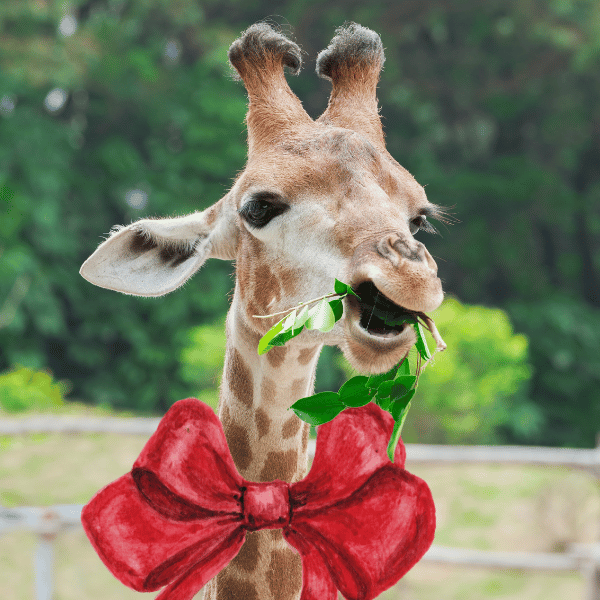
I have been saying this to my friends for years. If I ever become rich… filthy rich… the first thing I am buying is a giraffe.
Not a car.
Not a house upgrade.
A giraffe.
I’ve said this so many times that my friends don’t even react to it anymore.
They just nod.
They know.
They’ve accepted that somewhere in the future version of this life, there will be a giraffe on the farm, walking around slowly between the trees, doing whatever giraffes do, being absolutely magnificent while I watch from a distance with a cup of coffee.
The plan has always been to just… let it roam.
Open space, trees, room to move.
Not a cage, not a enclosure that feels like a prison.
Just a giraffe on a farm, living its life with the kind of dignity an animal that tall deserves. I’ve written about giraffes before on hayopetc.com because this is not a passing interest. This is a long-standing, deeply considered, completely impractical dream that I refuse to let go of.
Yeah… I’m taking a break from writing about crabs.
GIRAFFE
| COMMON NAME | Giraffe |
| SCIENTIFIC NAME | Giraffa camelopardalis (traditional classification); now recognized as up to 4 distinct species under newer taxonomy |
| ANIMAL CLASS | Mammal |
Scientific Classification
| Kingdom | Animalia |
| Phylum | Chordata |
| Class | Mammalia |
| Order | Artiodactyla |
| Family | Giraffidae |
| Genus | Giraffa |
| Notable Species | Northern Giraffe (G. camelopardalis), Southern Giraffe (G. giraffa), Masai Giraffe (G. tippelskirchi), Reticulated Giraffe (G. reticulata) |
Physical Characteristics
| Height | Males: 5.0 to 6.2 m (16 to 20 ft) — tallest living land animal on Earth; Females: 4.3 to 5.2 m (14 to 17 ft) |
| Weight | Males: 1,192 kg (2,628 lbs) average; Females: 828 kg (1,825 lbs) average |
| Neck Length | Up to 1.8 m (6 ft) — contains only 7 vertebrae, same as almost all mammals |
| Tongue | 45 to 50 cm (18 to 20 inches), dark bluish-purple, prehensile — used to strip leaves from thorny acacia branches |
| Legs | Approximately 1.8 m (6 ft) tall alone — taller than most adult humans |
| Lifespan in Wild | 20 to 25 years |
| Lifespan in Captivity | Up to 40 years under proper care |
| Sexual Maturity | 3 to 5 years; males typically breed from 7 years when competitive |
Habitat & Distribution
| Native Range | Sub-Saharan Africa — savanna, grassland, and open woodland across 15 countries including Kenya, Tanzania, South Africa, Botswana, Namibia, Uganda, Zimbabwe |
| Habitat Types | Savanna, open woodland, grassland with scattered acacia trees; requires access to tall trees and large open space |
| Climate Preference | Hot and semi-arid; tolerates wide temperature range but prefers warm, dry conditions |
| Conservation Status | VU — Vulnerable (overall); some subspecies Critically Endangered; giraffe populations declined nearly 40 percent in the past 30 years |
| Population Trend | Decreasing — fewer than 117,000 individuals estimated in the wild as of recent counts |
Diet & Behavior
| Diet Type | Herbivore (browser) |
| Primary Food | Acacia leaves and shoots; also eats fruits, flowers, seeds; consumes 34 kg (75 lbs) of vegetation per day |
| Water | Can go days without drinking by obtaining moisture from leaves; drinking requires an awkward wide-legged stance that leaves them vulnerable |
| Activity Pattern | Diurnal with some nighttime feeding; sleeps only 30 minutes to 2 hours per day — one of the least-sleeping mammals |
| Social Structure | Loose herds of 10 to 20 individuals; non-territorial; fluid group membership |
| Reproduction | Year-round; single calf most common |
| Gestation Period | 15 months |
| Birth | Calves are born standing, drop approximately 1.8 m (6 ft) to the ground — and stand within hours |
PET SUITABILITY FOR DAVAO CITY: 1 out of 5
| 5 | Excellent — beginner-friendly, easy care |
| 4 | Good — suitable for experienced owners |
| 3 | Challenging — requires specific knowledge |
| 2 | Very difficult — experts only |
| 1 | Not suitable — wild animal or illegal |
OVERALL RECOMMENDATION: Illegal to keep privately without DENR permits, physically impossible to house in any normal property. Yeah, right… like that’s gonna stop me from trying to own one heheheh…
Suitability Analysis
The first and most obvious challenge when keeping a giraffe is height.
A male giraffe stands up to 6.2 meters tall.
That is taller than a standard two-story Philippine house.
Your gate would not be an obstacle.
Your garden wall would be something it steps over.
Every structure on your property becomes a concern when you have an animal that tall walking around, because at that height it can see into places you did not intend for it to see into, reach things you did not intend for it to reach, and bump into overhead structures that you didn’t think needed to be giraffe-proofed because no reasonable person expects a giraffe in their backyard.
The second challenge is space.
Giraffes in the wild have home ranges of 50 to 475 square kilometers.
Even a small, comfortable captive facility needs multiple hectares of open land with appropriate tree cover.
Legally… under RA 9147, giraffes are not native Philippine wildlife and their importation would require CITES Appendix II documentation plus DENR permits for keeping large exotic mammals.
The process is not designed to be impossible, but it is designed to ensure that the animal ends up somewhere with genuine capacity to care for it.
A licensed wildlife facility or zoo could potentially do this.
An individual private owner on a farm would face significant regulatory scrutiny, and rightly so.
The climate, surprisingly, is not the worst problem.
Giraffes are from hot African savanna and Philippine heat (27 to 32 degrees, high humidity) is warmer and wetter than their natural range but not so extreme that it becomes impossible.
Zoos in tropical Asia keep giraffes successfully.
It’s doable with proper shade, fresh water access, and appropriate ground surface (giraffes are prone to foot problems on hard surfaces).
Feeding is a real logistical challenge.
A giraffe eats 34 kilograms of vegetation per day. In Africa that’s acacia and other native browse. In the Philippines you’d need to identify locally available browsing species they will accept (banana leaves, ipil-ipil, kakawate) and plant enough of it to feed a very large animal indefinitely. Supplemental browse would need to be sourced or grown at scale.
| For reference: a single giraffe at international auction typically sells for USD 25,000 to USD 65,000 (approximately P1.4 million to P3.7 million). Annual upkeep at a professional facility runs USD 20,000 to USD 30,000 per year. The ‘when I’m rich’ qualifier in the dream is doing a lot of heavy lifting. |
Care Guide
This care guide is based on what professional zoological facilities do, because that is the appropriate context. I am sharing it partly for education and partly because I like knowing what the full version of the dream actually looks like.
Housing requires a minimum of several hectares of open land with natural or planted browse, a large weatherproof shelter for nighttime and extreme weather, non-slip ground surface throughout (giraffe legs are extremely vulnerable to splaying on slippery surfaces, which can cause fatal injury), and overhead clearance of at least 7 to 8 meters in all covered areas. The shelter ceiling in particular needs to account for a giraffe that raises its head suddenly.
Feeding at 34 kg of browse per day means you need a planting plan, not just a feed schedule. Identify local browse species your giraffe will accept, plant them in rotation, and supplement with commercial herbivore pellets and hay. Fresh water in elevated containers (ground-level water requires that vulnerable wide-legged drinking posture which exposes them to predator attack instinctively, though there are no predators on the farm… their body still knows this and stresses them). Browse feeding stations at height (4 to 5 meters) allow natural feeding posture.
Temperature and humidity management in Davao means prioritizing shade above everything. Giraffes thermoregulate through their patterned coat and large body surface area, but they need access to shade during peak afternoon heat. Well-established tree cover is the most practical solution. Misting systems can supplement in particularly hot periods.
Health and veterinary care for a giraffe requires a large animal vet with exotic species experience. There are no walk-in giraffe vets in Davao. You would need to establish a relationship with a veterinary institution and have emergency protocols in place.
Common health concerns include: foot rot from wet ground, capture myopathy (stress-related muscle damage from handling), nutritional deficiencies if diet is poorly managed, and respiratory infections.
Handling and enrichment… giraffes are not handleable in the way most animals are.
They are not aggressive by nature but a kick from a giraffe is genuinely life-threatening to any human nearby.
Professional facilities use protected contact management — barriers always between keeper and giraffe — with positive reinforcement training for husbandry behaviors (accepting veterinary checks, presenting feet for inspection). Enrichment is mostly environmental: varied browse species, objects to investigate, space to move.
LEGAL STATUS IN THE PHILIPPINES: Exotic non-native wildlife regulated under RA 9147 and the CITES framework (Appendix II). Importation and private keeping requires DENR permits and CITES documentation. Not impossible — but requires demonstrated capacity for proper care and significant regulatory compliance.
CARE TAGS: Requires Licensed Facility • DENR + CITES Permits • Multiple Hectares Needed • Large Animal Vet Essential • 34 kg Browse Daily • Long-Term Dream
Pros & Cons
| Reasons to Keep Dreaming | Reasons to Be Patient |
| Tallest living land animal — nothing else looks like it or moves like it | Requires multiple hectares — not feasible on a standard property |
| Davao’s warm climate is manageable for tropical zoo facilities that keep giraffes | Costs P1.4M to P3.7M per animal plus P1.1M+ per year in upkeep |
| Long lifespan in captivity (up to 40 years) — a truly long-term companion | DENR and CITES permits required; regulatory process is substantial |
| Genuinely majestic roaming free on open land — the vision is real and worth having | Kick force is lethal; protected contact management required at all times |
| The dream has kept me motivated to build the farm to a scale where it becomes possible | 34 kg of browse per day requires a dedicated planting and feeding operation |
Trivia
- A giraffe’s heart weighs approximately 11 kg (24 lbs) and pumps blood at twice the pressure of a human heart — necessary to push blood all the way up that neck to the brain. When a giraffe lowers its head to drink, a complex system of valves prevents that high-pressure blood from rushing into the brain and causing it to black out.
- Giraffes sleep less than almost any other mammal — approximately 30 minutes to 2 hours per day, usually in short naps of just a few minutes. In the wild, prolonged sleep on the ground is dangerous because it makes them vulnerable to predators. Adults rarely lie down at all.
- A giraffe’s tongue is 45 to 50 cm long, prehensile (like an elephant’s trunk), and dark bluish-purple in color. The dark pigmentation is thought to protect against sunburn since they spend so much time feeding with their tongue exposed. It is also extremely tough, able to grip and strip thorny acacia branches without injury.
- Giraffes were previously classified as a single species with multiple subspecies. Genetic research published from 2016 onward has increasingly supported the recognition of four distinct species, which would make the giraffe situation similar to what happened with elephants when African forest and savanna elephants were formally separated. Conservation implications are significant — some of these distinct populations are critically endangered.
- The word ‘giraffe’ comes from the Arabic ‘zarafa,’ meaning ‘fast-walker.’ The ancient Greek name was ‘camelopardalis’ — camel-leopard — because early observers thought it looked like a camel with leopard spots. The scientific genus name Giraffa camelopardalis preserves both names simultaneously, which is charming.
- Giraffes make sounds, contrary to popular belief that they are silent. They hum, grunt, snort, hiss, and produce infrasonic vocalizations below the range of human hearing. Young giraffe calves bleat like cattle. The belief that they are mute likely came from the fact that they vocalize rarely and softly compared to most large mammals.

