

So there was an earthquake yesterday.
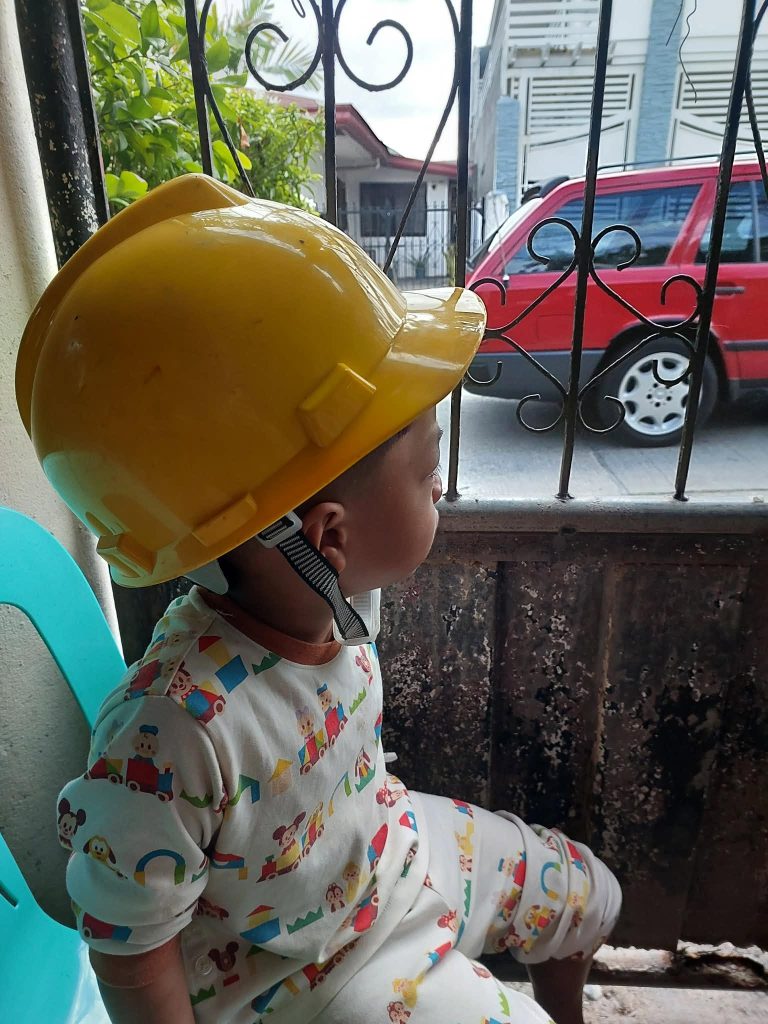
Lyle and I managed to get to the garage immediately and crouch near the front tire of the Innova.
Both dogs, Apo and Axl, had quietly moved to where we were.
They didn’t bark or run. They just immediately came close to us and kind of formed a protective huddle.
Apo kept pressing against Lyle like he was trying to cover him. Axl stayed near me but kept looking around, alert and very still.
It lasted only a few seconds.
And afterward I kept thinking about those few moments just before… the dogs clustering around us, they wanted to protect Lyle and be comforted by me at the same time.
Which is exactly what dogs do, I suppose… they hold your fear and their own fear together despite being afraid themselves.
It made me wonder, whether animals actually feel earthquakes coming.
So, as soon as everything went back to normal, I looked it up.
And the answer was: probably yes, but we’re not entirely sure how or how far in advance.
They say that animals can likely detect the P-wave, the smaller, faster-moving wave that travels ahead of the main shaking.
Humans rarely notice it.
Dogs, cats, and many other animals almost certainly do.
That would explain behavior changes in the seconds right before the ground moves under your feet… which is exactly what Apo and Axl appeared to do.
The more interesting and more debated question is whether animals can sense something hours or days before. There’s a lot of anecdotal evidence… and some of it is compelling enough that it’s hard to entirely dismiss.
| In 373 BC, the ancient Greek historian Aelian recorded that rats, weasels, snakes, and centipedes abandoned the city of Helike several days before a massive earthquake destroyed it. It is one of the earliest written accounts of animal earthquake behavior in history — and it’s still being cited by seismologists today. |
| In Haicheng, China in February 1975, thousands of snakes emerged from hibernation in the middle of winter — weeks before they should have. Days later, a 7.3 magnitude earthquake struck the city. The evacuation that followed, partly informed by animal behavior reports, is estimated to have saved 150,000 lives. |
| Before the 2004 Indian Ocean tsunami, eyewitnesses reported elephants and flamingos moving to higher ground hours before the waves hit. At Yala National Park in Sri Lanka, where thousands of humans died, almost no wild animal casualties were recorded. The animals had left. |
Which Animals Are Most Sensitive?
| Animal | What They Likely Detect |
| Dogs | Infrasound, ground vibrations through paw pads, electromagnetic changes — among the most responsive domestic animals |
| Cats | Ground vibrations and infrasound; often hide or flee rather than cluster protectively like dogs |
| Snakes | Extremely sensitive to ground vibrations through their jaw and belly scales; most documented earthquake predictions involve snakes |
| Elephants | Detect infrasound and ground vibrations through their feet across dozens of kilometers |
| Birds | Detect infrasound and barometric pressure changes; documented fleeing before multiple major events |
| Fish | Sensitive to water pressure and electromagnetic changes; unusual surface behavior reported before quakes |
| Horses | Refuse to be ridden, become agitated; some California reports of horses refusing riders before quakes |
| Cows | Enter an unusual freeze response — stop moving entirely, which is very unlike their normal behavior |
How to Read Your Dog’s Body Language Before an Earthquake
Based on what Apo and Axl did today, and what the behavioral literature describes, here are the things worth paying attention to.
None of these are guaranteed earthquake predictors… dogs behave strangely for lots of reasons.
But if you notice several of these happening together, without any obvious other cause, it might be worth paying attention to your surroundings.
- Unprompted clustering — moving close to family members without being called, especially around children or their primary person
- Unusual stillness — alert but not moving, ears up, scanning; different from relaxed stillness
- Whining or low vocalization without obvious trigger — not at a noise outside, not at another animal
- Pawing at the ground or sniffing the floor insistently — responding to something coming up through the surface
- Hiding or trying to get under furniture — fear response, opposite of the protective clustering Apo and Axl showed
- Refusal to go outside — especially if normally eager to go out
- Excessive barking at nothing, then sudden quiet — the quiet after unexplained barking is often more significant than the barking
What struck me about Apo and Axl was that they didn’t panic. They didn’t bark. They just moved to where we were and stayed there, quietly waiting for the shaking to stop.


Somehow, they knew they had to behave and that something weird was happening.
I don’t know if dogs can predict earthquakes. The science says probably not with any reliable advance warning. But I know that today, in the garage, the two dogs, in the case of an emergency are ready to protect Lyle.