

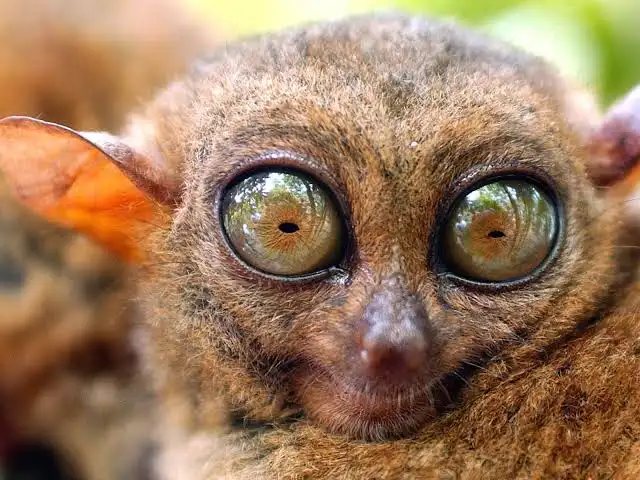
Nature has been running experiments for 3.8 billion years and has produced countless, wonderful, beautiful, and sometimes weird and creepy animals in the process.
Because Halloween’s just right around the corner, here are some creepy but fascinating animals we’d love to share with you.
And yeah… they do exist!
1. Aye-Aye
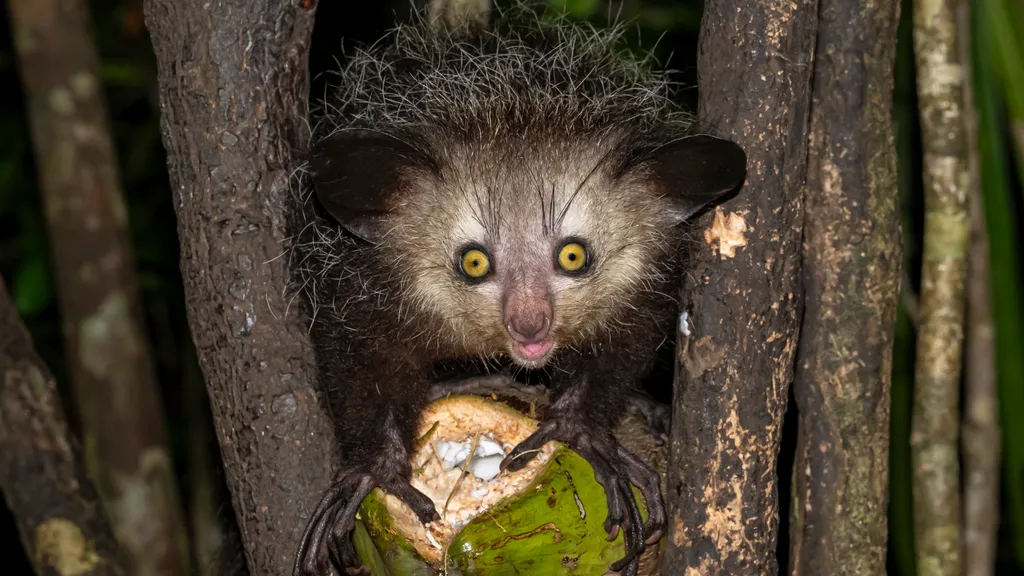
The Aye-Aye is a nocturnal primate from Madagascar with enormous bat-like ears, with constantly growing rodent-like teeth, and one elongated skeletal middle finger it uses to tap on wood and listen for hollow sections where larvae might be hiding — then extract them.
Local Malagasy tradition considers the Aye-Aye a harbinger of death and kills them on sight.
Scientists consider them fascinating.
The Aye-Aye considers none of this while tapping on trees in the dark with its nightmarish finger.
2. Goblin Shark
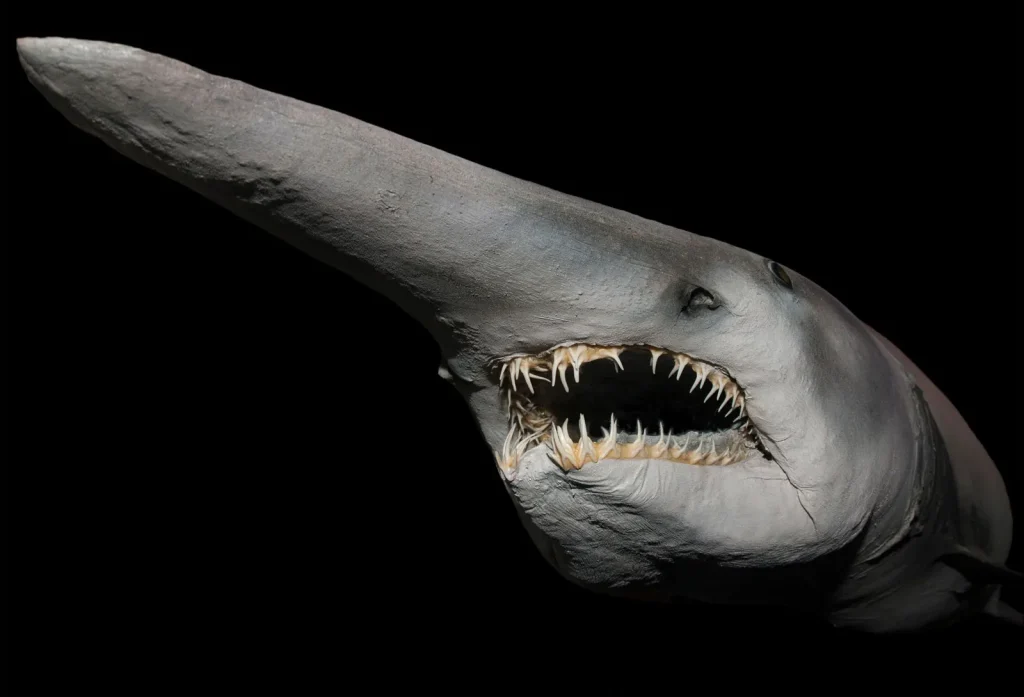
The Goblin Shark is a deep-sea species with a long flattened snout and a jaw that projects outward from its face — separate from the skull — when striking prey.
In normal swimming posture it looks like a pale pink shark with an unusually long nose.
But when it strikes, the jaw detaches forward and the entire mouth lunges at the target before retracting.
Think about what a fish must be feeling having just outran a goblin shark only to realize that same shark could throw it’s mouth a few more inches forward to grab your little, fishy tail.
This is called slingshot feeding.
And the Goblin Shark has been doing this undisturbed in the deep ocean for 125 million years..
3. Blobfish
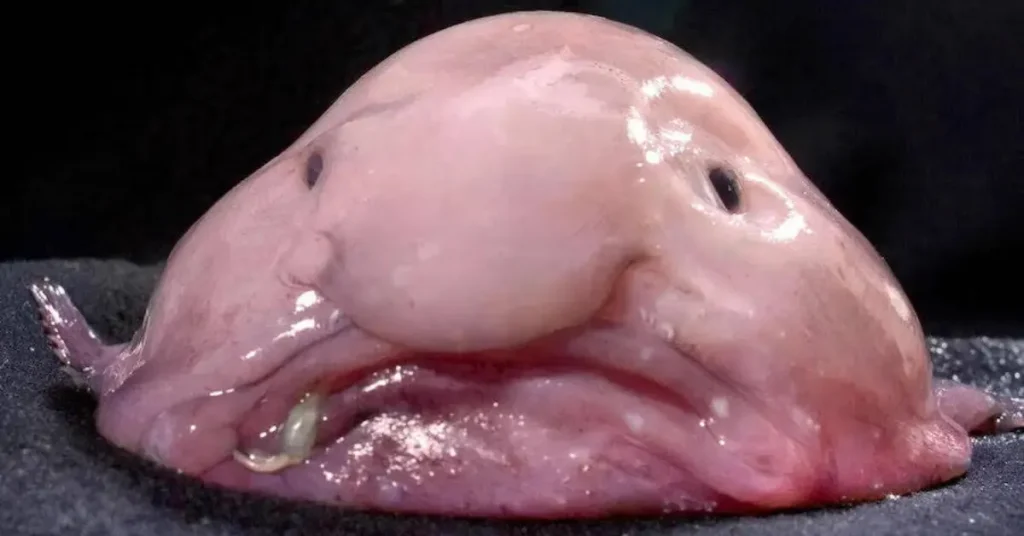
The Blobfish is almost certainly the most famous ugly animal on the internet, and almost all photographs of it are of a dead blobfish decompressed from its natural deep-ocean habitat.
At a depth of 600 to 1,200 meters, where the pressure is 60 to 120 times surface pressure, the Blobfish looks like a completely normal fish.
When brought to the surface, the pressure change causes its gelatinous flesh to expand and collapse. The famous saggy sad face is what decompression does to a fish that lives where no human has business going.
4. Hagfish
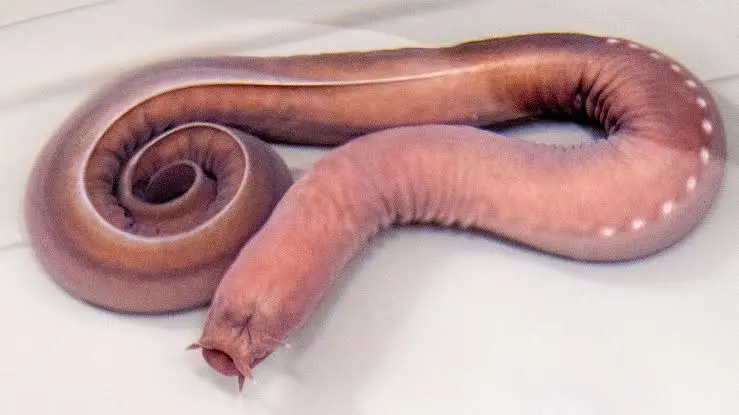
I had to figure this fish in one way or another because one of my favorite YouTubers keeps mentioning this in his videos. And because of that, I had to look up hagfish and hmmm… come to think of it, I think this is the entire reason why I’m writing this list in the first place…
Anyway, thanks Clint Laidlaw of Clint’s Reptiles for constantly teaching people new things about animals creepy or otherwise.
Anyway, the Hagfish is an eel-like animal with no jaw, no paired fins, and no stomach.
It feeds primarily on carcasses of dead marine animals, burrowing inside them and eating it sometimes from the inside out.
When threatened, it produces an enormous volume of thick, sticky slime — a single hagfish can fill a bucket in minutes.
The slime then proceeds to suffocate the fish it comes into contact with.
And because it can also suffocate in its own slime, a hagfish removes the slime from itself, by tying its own body into a knot and sliding the knot from head to tail to scrape the slime off.
The hagfish is 300 million years old and has not changed significantly.
5. Star-Nosed Mole
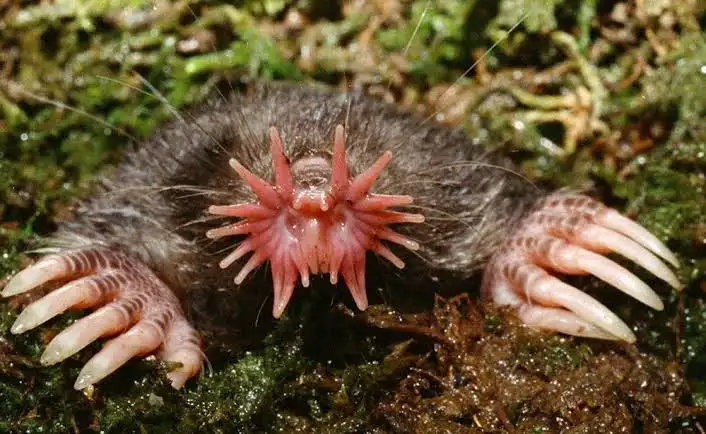
The Star-Nosed Mole lives underground in North America and has 22 pink fleshy tentacles arranged in a star pattern around its nostrils. It uses these tentacles to identify and eat prey faster than the human eye can register, faster than any other known mammal.
The star nose contains more nerve endings per square centimeter than any known organ in any known mammal. Its ‘face’ processes touch the way human visual cortex processes sight. It is essentially seeing with its nose at 25 times the sensitivity of the human hand.
6. Tarsier
The Philippine Tarsier is one of the smallest primates in the world and has eyes so large relative to its skull that they cannot move in their sockets at all.
To compensate, the Tarsier can rotate its head approximately 180 degrees — almost completely backward like an owl.
Each eye is roughly the same size and weight as its brain.
It is also found only in the Philippines, in Bohol and parts of Mindanao. It is genuinely one of our most extraordinary endemic species and it looks like a surprised cartoon character that has been awake for three days.
7. Candiru
This.
This is definitely every red-blooded male’s nightmare.
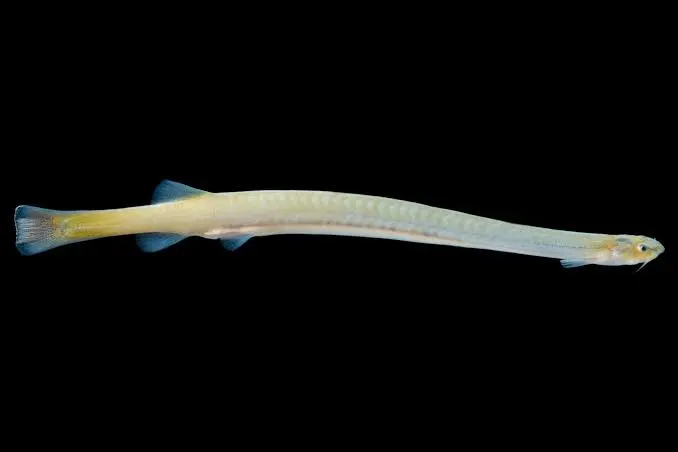
Well, it’s definitely one of mine.
The Candiru is a tiny parasitic catfish from Amazonian rivers, typically 2.5 centimeters long, that normally parasitizes the gills of larger fish by swimming in and feeding on blood.
Its reputation — which is partially but not entirely exaggerated — involves being attracted to urea in water, which has made it infamous among people who swim in Amazon rivers. It is translucent, nearly invisible in water, and fits in spaces that most animals wouldn’t consider available.
This is one of those animals where knowing it exists changes your relationship with certain bodies of water permanently.
8. Mantis Shrimp
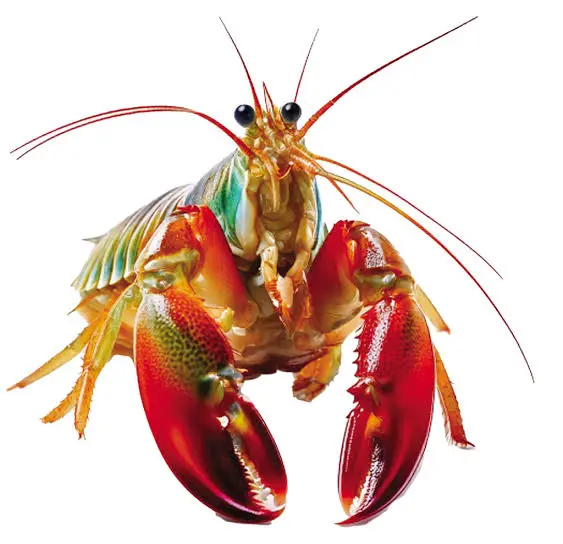
The Mantis Shrimp can be found in Philippine waters and is one of the most visually extraordinary animals in the ocean — electric blue, green, orange, red — which is nature’s way of warning you about something before you get close enough to be hit by it.
Hit?
Yeah Manny Pacquiao ain’t got nothing on this shrimp.
The mantis shrimp packs a punch that generates a temperature briefly hotter than the surface of the sun. because of that, your aquarium? Well, that’s always going to be at risk if you have one in it.
The Peacock Mantis Shrimp found in Philippine waters is also one of the most visually extraordinary animals in the ocean — electric blue, green, orange, red — which is the universe’s way of warning you about something before you get close enough to be hit by it.
9. Blue-Ringed Octopus
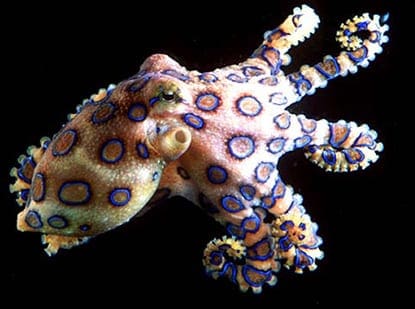
The Blue-Ringed Octopus is roughly the size of a golf ball, iridescent blue when threatened, and carries enough tetrodotoxin to kill 26 adult humans.
There is no antivenom.
The bite is painless — which means people often don’t know they’ve been bitten until paralysis begins.
It is found in Philippine coastal waters.
Although it is not aggressive, they can definitely kill you.
Most bites happen when someone picks one up because it looks beautiful.
It does look beautiful…
That is the problem.
10. Naked Mole Rat
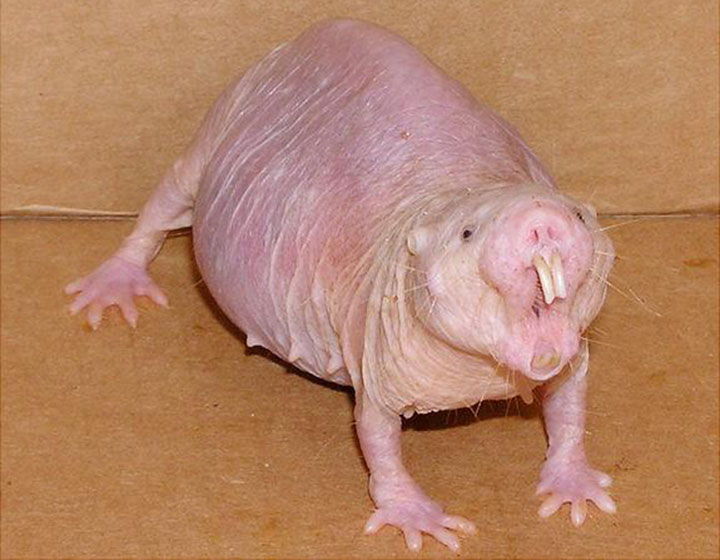
The creepiest animal I could think of when trying to come up with this list is the naked mole rat.
Ok maybe not really hehehe I just wanted to include it here because I dream of one day having an entire colony of naked mole rats as pets.
Anyway… here are reasons why the Naked Mole Rat is creepy and fascinating at the same time.
It does not age in any measurable way after reaching adulthood.
Its cancer rate is near zero.
It can survive 18 minutes without oxygen by switching from glucose to fructose metabolism.
It cannot feel pain from acid or capsaicin.
It lives in an insect-like colony with a queen who is the only breeding female, workers who never reproduce, and soldiers who defend the colony.
It is warm-blooded but functions more like a cold-blooded animal at high temperatures.
Scientists consider it one of the most biologically unusual mammals on Earth.
It also looks like a thumb with teeth.
Or…
Hehehehe…
All ten of these animals evolved their specific weirdness because that weirdness worked. The Hagfish’s slime works. The Goblin Shark’s projecting jaw works. The Aye-Aye’s skeletal finger works. The Blobfish’s gelatinous low-density flesh works… uhm… it works. Hehehehe
Nature optimises for survival in context, not for human aesthetic preferences.
The correct response to these animals is not revulsion.
It is respect… and possibly a quiet appreciation for the fact that evolution had 3.8 billion years to play with and we ended up the way we ended up as humans… wheew!
| ANIMAL TRIVIA: The Naked Mole Rat is the only known mammal to exhibit eusociality — the same colony structure as bees and ants, where one queen breeds and all others work. It is also one of the only mammals that appears to be biologically non-aging: its mortality rate does not increase with age the way it does in virtually every other mammal on Earth. Scientists studying longevity consider the Naked Mole Rat one of the most important research subjects alive. It also looks like a thumb with teeth. |

