

Happy Birthday, Domz!
There are friendships that start over shared interests… music, art, and youthful restlessness.
Back when we were 15, I had a Volkswagen Beetle and Domz and I would sneak out at midnight to drive with no destination in mind. We’d go anywhere the car would take us.
We bonded over all of that.
Late nights, loud music, oil paintings that would never sell but I made anyway, conversations that started nowhere and ended somewhere surprising.
That was the foundation of our friendship.
But the thing that really cemented it… the thing that made me know beyond any doubt that this was a friend worth keeping… was a python.
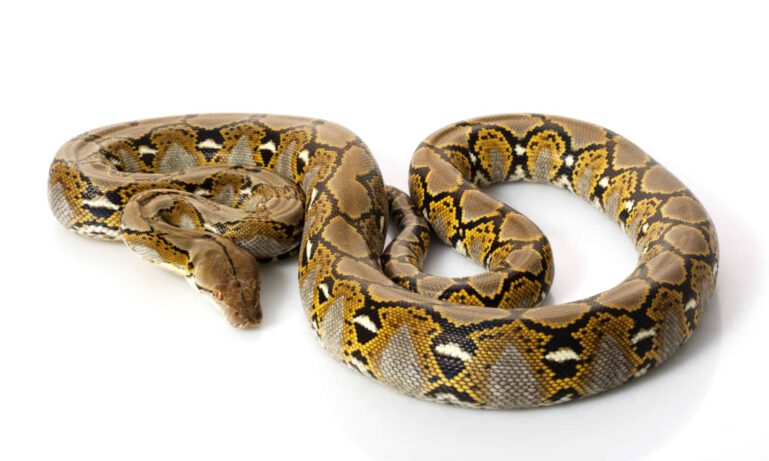
A reticulated python to be specific, though at the time I was more concerned about the massive bolo wound on its back than its scientific classification.
Someone had kept this snake in a sack.
And whoever it was had also apparently tried to hack at it with a bolo at some point, because when I got hold of it, there was a deep wound across its back that needed stitching.
I paid for the veterinary fees myself.
Had the wound sewn up properly.
And then Domz and I set about nursing this animal back to health together, which is not the kind of activity that comes up in most friendships and yet somehow felt completely natural for ours.
The snake was an escape artist. Of course it was.
There was still a rope attached to it from whoever had it before… and thank God for that rope, because the first time it got out of its container at Domz’s place, it slid under the front stairs and disappeared. Domz had to wait it out alone.
Hours.
His mom was terrified (understandably).
I wasn’t there to help him, which I still feel a little bad about if I’m honest.
But he waited, and when the snake finally came out, he grabbed it and put it back.
Eventually the snake moved to my place, where it escaped again… this time hiding in the warmest spot in my airconditioned room, which for a cold-blooded animal in a cool room makes complete sense.
My sister hated the whole arrangement.
My dad checked on it once and the snake had buried itself under the substrate, invisible, which I think saved me several uncomfortable conversations.
We lost the snake eventually.
Lent it to some people who called themselves artists and who apparently decided it was large enough to eat.
Those people are no longer in our lives.
I also stopped doing oil painting around that time… I’m not sure those two things are entirely unrelated. Maybe it’s because they ate our pet snake.
Some endings come in clusters.
Twenty-plus years later. Domz and I are still friends. Still the person I think of when something worth talking about happens.
Happy Birthday, pade.
This one’s for you.
RETICULATED PYTHON
| COMMON NAME | Reticulated Python |
| SCIENTIFIC NAME | Malayopython reticulatus |
| ANIMAL CLASS | Reptile |
Scientific Classification
| Kingdom | Animalia |
| Phylum | Chordata |
| Class | Reptilia |
| Order | Squamata |
| Family | Pythonidae |
| Genus | Malayopython |
Physical Characteristics
| Body Length | Average 3 to 6 m (10 to 20 ft); record individual measured 7.67 m (25.2 ft) — longest snake species in the world |
| Weight | Average 75 to 100 kg (165 to 220 lbs); large females can exceed 160 kg |
| Lifespan in Wild | 15 to 20 years (estimated) |
| Lifespan in Captivity | 20 to 30 years under proper care |
| Sexual Maturity | 2 to 4 years; females typically later than males |
Habitat & Distribution
| Native Range | South and Southeast Asia: Bangladesh, Myanmar, Thailand, Laos, Cambodia, Vietnam, Malaysia, Indonesia, Philippines, Singapore, and surrounding islands |
| Habitat Types | Tropical rainforest, woodland, grassland, river edges, agricultural areas, occasionally urban outskirts |
| Climate Preference | Tropical; warm and humid, 27 to 35 degrees C; high humidity |
| Conservation Status | LC — Least Concern (globally); some regional pressure from hunting and habitat loss |
| Population Trend | Decreasing in some areas due to skin trade and habitat loss |
Diet & Behavior
| Diet Type | Carnivore (ambush predator) |
| Primary Food | Birds, mammals (rats, pigs, deer, primates in the wild); larger adults capable of taking very large prey |
| Activity Pattern | Nocturnal to crepuscular |
| Social Structure | Solitary |
| Reproduction | Seasonal; females lay eggs and coil around them throughout incubation |
| Incubation Period | 88 to 90 days |
| Clutch Size | 15 to 80 eggs; one of the largest clutch sizes of any python species |
PET SUITABILITY FOR DAVAO CITY: 2 out of 5
| 5 | Excellent — beginner-friendly, easy care |
| 4 | Good — suitable for experienced owners |
| 3 | Challenging — requires specific knowledge |
| 2 | Very difficult — experts only |
| 1 | Not suitable — wild animal or illegal |
OVERALL RECOMMENDATION: Experienced keepers only — a reticulated python is not a starter snake, not a casual pet, and not something you lend to people you haven’t fully vetted.
Suitability Analysis
Reticulated pythons are extremely intelligent animals. They are patient and they are excellent escape artists, and they have absolutely no interest in making your life easy.
The python we had was a rescued animal with a bolo wound and a rope still attached to it… not exactly a textbook starting point for python keeping.
But even so, even in that compromised state recovering from surgery, it found its way out of its container not once but multiple times. That rope was the only reason we got it back the first time. Without it we would have been searching the neighborhood on our hands and knees.
Reticulated pythons are native to the Philippines. They occur naturally across Luzon, Mindanao, and many of the smaller island groups. Which means Davao’s climate (27 to 32 degrees, 78 to 83 percent humidity) is not just compatible with them… it’s essentially their home environment.
You don’t need expensive heating equipment.
You don’t need humidity controllers.
Davao is already what they need.
That’s actually one of the few things that makes keeping one here more manageable than in, say, Europe or North America where keepers spend a lot of money replicating what we have naturally.
But everything else about keeping a large reticulated python is a serious commitment.
Space is the first thing. A juvenile can start in a reasonably sized enclosure, but adults… a six-meter adult female reticulated python needs a very large enclosure.
Housing a large retic properly is genuinely difficult. You’re either dedicating a significant room to it or building a custom outdoor enclosure, and the security requirements for either are not easy.
Legally, reticulated pythons are native wildlife in the Philippines and fall under RA 9147. Wild-caught individuals cannot be kept without DENR permits.
Captive-bred animals require documentation.
You can own one but it will require a lot of paperwork and compliance, not just a cage and a feeder rat.
And I want to say clearly: if someone offers you a python that was ‘just found’ somewhere with no documentation, walk away.
The animal has probably been taken illegally from the wild and the seller is not someone you want to be associated with.
The cost of feeding a large python is also worth thinking about seriously.
Adults eat large prey items… rabbits, small pigs, large poultry.
Sourcing appropriate pre-killed prey in Davao takes connections in the reptile community.
Bankerohan has live animals but feeding live prey to a large constrictor is dangerous for both the snake and the prey, and generally not recommended by experienced keepers.
This is not a once-a-week problem to solve.
This is a permanent logistics challenge for the entire lifespan of the animal.
Care Guide
Everything I know about caring for a reticulated python properly I learned partly from that first chaotic experience with a wounded rescue snake, partly from research, and partly from watching people who actually know what they’re doing.
Before that, my experience with snakes were only small ones.
Let me share what I’ve put together.
Housing for a juvenile retic can start reasonably compact (a 120x60x60 cm enclosure for a snake under 2 meters), but you need to think ahead.
These snakes grow fast.
Within a few years you’re dealing with an animal that needs a custom-built enclosure of at minimum 2.4×1.2×1.2 meters, and that’s for a mid-sized individual.
Large adults need considerably more.
The enclosure needs to be escape-proof… a fully sealed structure that a powerful muscular snake cannot push, twist, or lever open.
Our python got out of what seemed like a secure container.
Twice.
Build to a higher standard than you think you need.
Substrate should hold some humidity without staying wet.
Coconut fiber, cypress mulch, or a bioactive substrate works well.
Provide at least two hides (warm end and cool end), a water dish large enough for the snake to soak in (they do this regularly and it helps with shedding), and climbing structures if space allows. Retics are semi-arboreal as juveniles and appreciate some vertical enrichment.
Feeding… juveniles eat appropriately sized prey every 7 to 14 days.
Adults eat less frequently as their metabolism slows with size.
Pre-killed or frozen-thawed prey is the standard recommendation and for good reason… a live rabbit or pig can injure a snake during feeding. In Davao, frozen feeder rodents can be sourced from specialist reptile keepers. For larger prey you’ll need direct arrangements with poultry suppliers or small livestock contacts. This is not something you can solve with a trip to SM.
Temperature and humidity in Davao are your greatest advantage as a keeper here. Ambient temperatures are naturally in range. A thermal gradient of 27 to 32 degrees is easily maintained with minimal equipment. Humidity of 60 to 80 percent is also naturally achieved.
Monitor both with a reliable thermometer and hygrometer regardless.
Don’t assume.
Health issues in retics include respiratory infections (usually from incorrect humidity or temperature), mites (especially in wild-caught animals), inclusion body disease (a serious viral condition in pythons), and injuries from feeding mishaps or escape attempts.
The wound on our rescued python was from a bolo… after proper veterinary stitching and clean conditions, it healed fully.
Reptile-experienced vets in Davao exist but require some searching.
Identify one before you need one urgently.
Handling a reticulated python is the part that requires the most honest conversation. Juveniles can be handled relatively easily by one person with proper technique. Adults over three meters should never be handled by one person alone.
This is not an exaggeration and not excessive caution.
A large retic that decides it doesn’t want to be handled can cause serious injury.
Two experienced people, calm movements, no feeding for 48 hours before handling, and full attention throughout.
The snake we had was manageable because it was still young and recovering.
A healthy four-meter adult is an entirely different animal.
And I have been bit several times by a python.
It is not a nice experience.
LEGAL STATUS IN THE PHILIPPINES: Native Philippine wildlife protected under RA 9147 (Wildlife Resources Conservation and Protection Act). Wild-caught individuals cannot be legally kept without DENR permit. Captive-bred animals require documentation of provenance. CITES Appendix II listing applies to international trade of specimens and skins.
CARE TAGS: Experienced Keepers Only • Native Philippine Species • Escape-Proof Enclosure Essential • Two-Person Handling for Adults • DENR Documentation Required • Long-Term Commitment
Pros & Cons
| Pros | Cons |
| Native to Philippines — Davao’s climate is naturally ideal, no expensive equipment needed | Grows to 5 or 6 meters; requires enormous, escape-proof custom enclosure |
| Intelligent and can become relatively calm with consistent, confident handling | Adults must never be handled alone — serious injury risk without a second person |
| Long lifespan of 20 to 30 years in captivity — a genuine long-term companion | Feeding large adults requires logistics and contacts beyond what any pet shop provides |
| One of the most visually stunning reptile species in the world | DENR documentation required; wild-caught animals are illegal without permit |
| Rescue animals (like ours) can recover fully from injuries with proper vet care | Do not lend to people you don’t fully trust. Lesson learned. |
Trivia
- The reticulated python is the longest snake species in the world. The record individual, caught in Sulawesi, Indonesia, measured 7.67 meters (25.2 feet) and weighed approximately 158 kg. For scale, that is longer than most jeepneys.
- The name ‘reticulated’ comes from the Latin ‘reticulum’ meaning net or network — a reference to the intricate, geometric pattern of scales that covers their body, which is also why their skin is so prized in the leather trade.
- Reticulated pythons are native to the Philippines and are found across Luzon, Mindanao, Palawan, and many smaller islands. They are one of the largest predators in Philippine forest ecosystems.
- They are one of the few snake species documented to have killed and consumed adult humans, though such incidents are extremely rare and almost always involve unusually large individuals and unusual circumstances.
- Female reticulated pythons are thermogenic during incubation — they can generate their own body heat by contracting their muscles rhythmically around their eggs, raising the temperature inside the coil by several degrees above ambient. This is rare among reptiles.
- Despite their fearsome reputation, captive-bred reticulated pythons that have been handled consistently from hatchling age can become remarkably calm and tolerant of human interaction. The keyword is captive-bred. Wild-caught animals are a completely different experience.
Happy 47th Birthday Pade!
Domz, if you’re reading this… happy 47th birthday.
Lagas n akita pade.
Here’s to more late nights, more bad decisions that turned into good stories, and more animals that test the limits of our patience and our friendship.
I hope your birthday is exactly what you want it to be. And I hope whoever read this far now understands why the reticulated python will always hold a spesial place in our story.


Didn’t I mention I slept one night and it escaped from its tub enclosure next to my bed and slid underneath the pillow my head rested on? When I woke up, I thought I lost it when I searched the entire room. Apparently it liked my warm head.