

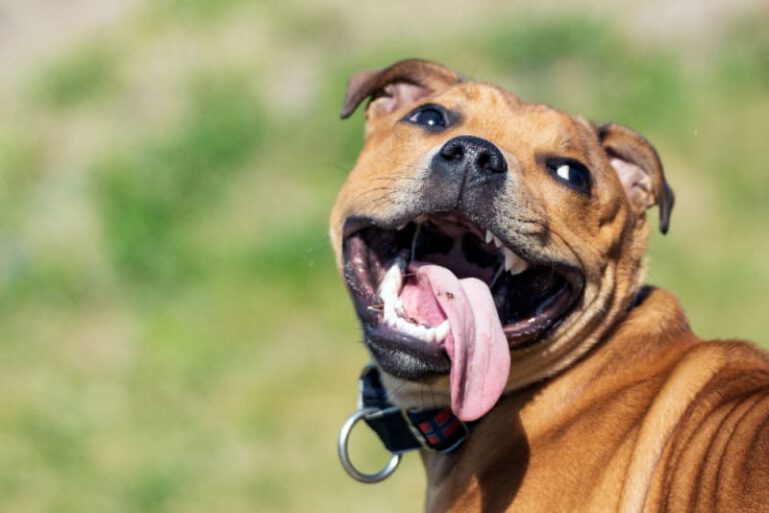
DOG
| COMMON NAME | Dog |
| SCIENTIFIC NAME | Canis lupus familiaris |
| ANIMAL CLASS | Mammal |
Scientific Classification
| Kingdom | Animalia |
| Phylum | Chordata |
| Class | Mammalia |
| Order | Carnivora |
| Family | Canidae |
| Genus | Canis |
Physical Characteristics
| Body Length | Varies widely by breed: 15 to 110 cm (6 to 43 inches) |
| Height at Shoulder | Varies by breed: 15 to 90 cm (6 to 35 inches) |
| Weight | Varies by breed: 1 to 90 kg (2 to 200 lbs) |
| Lifespan | 10 to 13 years average; varies significantly by breed and size |
| Sexual Maturity | 6 to 12 months depending on breed |
Habitat & Distribution
| Native Range | Worldwide — fully domesticated, lives alongside humans globally |
| Habitat Types | Human homes, farms, urban and rural environments |
| Climate Preference | Highly adaptable; some breeds suited to heat, others struggle |
| Conservation Status | LC — Least Concern (domesticated species) |
| Population Trend | Stable to Increasing |
Diet & Behavior
| Diet Type | Omnivore |
| Primary Food | Commercial dog food, meat, rice, vegetables |
| Activity Pattern | Diurnal (adapts to owner’s schedule) |
| Social Structure | Pack-oriented; bonds strongly with human family |
| Reproduction | Year-round |
| Gestation Period | 58 to 68 days |
| Litter Size | 1 to 12 puppies depending on breed |
PET SUITABILITY FOR DAVAO CITY: 5 out of 5
| 5 | Excellent — beginner-friendly, easy care |
| 4 | Good — suitable for experienced owners |
| 3 | Challenging — requires specific knowledge |
| 2 | Very difficult — experts only |
| 1 | Not suitable — wild animal or illegal |
OVERALL RECOMMENDATION: Dogs are the best pet you can have in Davao — just make sure you actually know how to keep them alive in this heat.
Suitability Analysis
So… dogs. I mean, where do I even start. I’ve had dogs my whole life.
Different breeds, different sizes, different temperaments.
And the one thing that stresses me out every single summer is watching them panting when it’s hot.
I’ve owned several dogs over the years and I’ll be honest… I didn’t always know what I was doing.
Especially when it comes to the heat.
Davao is hot.
Even some nights, it’s hot.
We’re sitting at 27 to 32 degrees pretty much year-round, and the humidity just wraps around you like a wet towel.
For us humans that’s uncomfortable.
For dogs, especially thick-coated ones, it can be genuinely dangerous.
I’ve seen dogs in other people’s yards, just chained outside in the middle of the day, no shade, no water, tongues dragging on the concrete… and you just want to say something but you don’t want to cause a scene.
That’s actually one of the things that pushed me to write about this.
A lot of dogs die in the Philippines because of overheating and the sad part is that many owners just don’t know better.
They think dogs are tough.
And they are… but not in 32-degree heat with 80% humidity and no water and a chain that’s three feet long.
That’s neglect, even if it’s unintentional.
In terms of keeping a dog in Davao though… dogs are the most practical pet you can have here.
They fit in a typical subdivision lot, they don’t require exotic food, vets are everywhere (there are good ones in the city), and they are legal in every way imaginable.
No DENR permits, no CITES listings, no RA 9147 concerns.
Just a dog and a responsible owner.
The main thing to think about is breed.
If you’re in Davao and you’re thinking of getting a Husky or a Chow Chow or a Saint Bernard… I get it, they’re beautiful dogs.
But those breeds were literally bred for cold weather.
Putting one in Davao without proper airconditioning is cruel.
Stick to short-coated breeds if you don’t have aircon in your house. Aspin (Asong Pinoy) is honestly one of the most heat-tolerant dogs you’ll find and people underestimate them all the time. They’re smart, loyal, and they cost you nothing if you adopt or buy one.
Space-wise, most dogs are fine in a 120 to 200 sqm lot if they get proper exercise.
But a dog isn’t furniture.
You can’t just leave them tied up in the corner of the garden and expect them to be okay.
They need to move, they need to interact, they need stimulation.
A bored dog becomes a destructive dog.
A hot, bored dog becomes a sick dog.
One left under the sun for too long becomes a hotdog.
Ok, ok… bad joke.
But you get it right?
Care Guide
Okay so let’s talk about actually keeping your dog alive and happy in Davao, because the heat is the number one thing you need to manage.
Everything else comes after that.
Housing
Your dog needs shade.
Always.
Non-negotiable.
If your dog is outside (and a lot of dogs here are), they need a proper covered area that blocks direct sunlight, not just at noon but in the afternoon when the concrete radiates heat back up.
An elevated dog house or a shaded area with a raised bed or wooden pallet helps because the ground gets blazing hot.
And please… if you have a large-breed dog in a small space, let them inside during the hottest part of the day.
I know not everyone has aircon in every room, but even a tiled floor indoors is cooler than an outdoor concrete slab at 2pm.
Feeding.
Dogs in Davao do well on a mix of commercial dry dog food and home-cooked rice with meat or vegetables.
You can get decent dog food at SM, Gaisano, or even the smaller pet shops along Ilustre. Bankerohan sometimes has people selling dog food by the kilo which is cheaper but make sure you know what’s in it.
Fresh Water
Fresh water is the most important thing.
Change it multiple times a day.
In this heat, water left outside gets warm within an hour and dogs don’t drink warm water as readily. A warm, slightly dehydrated dog is already in trouble before you even notice it.
Temperature and humidity
Davao is actually okay for most short-coated local breeds.
Aspins, Askal, local mixed breeds… they’re adapted.
But even they need to cool down. A shallow basin of water to stand in works. Wet towels on their paws and belly if they’re really panting hard.
Some people freeze water bottles and put them near the dog’s resting spot. It sounds extra but it works. If you have long-coated or double-coated breeds, regular grooming is not optional here. Trim the coat but don’t shave it (the coat actually protects from sunburn, which yes, dogs can get).
Cleaning and hygiene
Dogs in Davao tend to accumulate dirt and moisture quickly because of the climate. Bathe them regularly but not too often… once or twice a week is usually fine depending on how much they’re outside. Keep their ears checked becuase the humidity here makes ear infections common. Wipe ears weekly and watch for shaking of the head or scratching.
Health and vet care
Health and vet care in Davao is accessible. There are veterinary clinics in most major areas of the city. Heartworm, tick fever, and parvovirus are the big three to protect against. Get your dog on a monthly heartworm preventive (Heartgard or local equivalents are available at most vet clinics), do regular tick prevention especially if they go outside, and make sure puppies are fully vaccinated.
Don’t skip the parvo vaccine. Parvo is brutal and it spreads easily here.
Handling and enrichment.
Dogs are social animals.
They need you.
They need walks, they need play, they need to be talked to.
A dog left alone all day with nothing to do will bark, chew things, and generally make your neighbors regret living next to you. Even thirty minutes of play or a short walk in the early morning or evening (not midday, never midday in Davao heat) makes a huge difference to their mental health and yours.
LEGAL STATUS IN THE PHILIPPINES: Fully legal to own. Dogs are governed by the Animal Welfare Act (RA 8485, amended by RA 10631), which prohibits cruelty and neglect. Davao City also has local ordinances on dog registration and anti-rabies vaccination. Registration with your barangay is required.
CARE TAGS: Beginner-Friendly • Heat Management Required • Daily Interaction Needed • Vet Access Important • Breed Selection Matters • Legal and Recommended
Pros & Cons
| Pros | Cons |
| Loyal, social, and great for family life | Requires daily attention and exercise |
| Adaptable to Davao climate (especially local breeds) | Heat can be fatal if not managed properly |
| Food and supplies widely available locally | Ongoing costs: food, vets, vaccines, grooming |
| Legal, no permits required | Long-coated breeds struggle badly in Davao heat |
| Vet access is good across Davao City | Barking and space needs can be an issue in small lots |
Trivia
- Dogs have been domesticated for at least 15,000 years, making them the oldest domesticated animal in human history.
- The Aspin (Asong Pinoy) is the Philippines’ own native mixed-breed dog and is one of the most genetically resilient and heat-adapted dogs in the country.
- Dogs can get heatstroke at body temperatures above 41 degrees C (106 degrees F) and it can become fatal within minutes.
- A dog’s sweat glands are located primarily in their paw pads, which is why panting is their main cooling mechanism, not sweating like humans.
- Rabies is still present in the Philippines, making annual anti-rabies vaccination not just a good idea but a legal requirement under the Rabies Act of 2007 (RA 9482).
- The Philippines has one of the highest rates of dog ownership in Southeast Asia, with an estimated 11 to 12 million pet dogs across the country.
Sources: Wikipedia (Canis lupus familiaris), IUCN Red List, RA 8485 / RA 10631 (Animal Welfare Act), RA 9482 (Rabies Act), PAGD (Philippine Animal Welfare Society), personal experience.

