

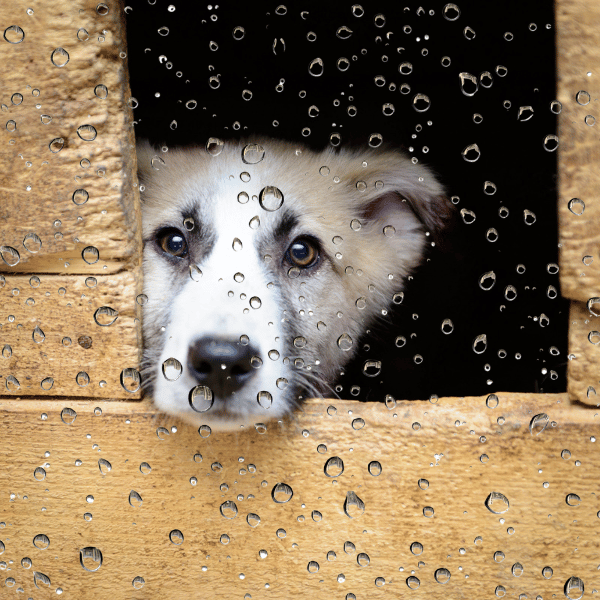
Ugh… here it comes again… typhoon season…
If you have animals, that dread gets a little heavier.
Because while everyone else is stocking up on canned goods and checking if the flashlights still work, you’re also thinking about your dog, your cat, your turtle, your chickens, your goats… whoever your animals happen to be.
I think people forget sometimes that typhoon season doesn’t just affect humans.
We see the news coverage after a big storm and it’s houses, roads, power lines.
And that’s important.
But the animals suffer too, quietly, and often without anyone documenting it.
The cats that got left behind when families evacuated. The dogs chained outside because someone didn’t think it through. The livestock swept away in flash floods on farms in the lowlands. The wild animals displaced from their habitats when rivers overflow and forests get battered for days straight.
In Davao we’re in a relatively fortunate position compared to the rest of the Philippines.
We’re in a typhoon buffer zone of sorts, geographically speaking, and direct hits are rare compared to the Visayas or Northern Mindanao.
But rare doesn’t mean never.
And even without a direct typhoon hit, the rainy season here from June through December brings flooding, extended heavy rain, strong winds, and all the secondary problems that come with those things.
Leptospirosis.
Fungal infections.
Hypothermia in smaller animals.
Stress-related illness.
Respiratory problems from cold and damp.
This article is about all of that.
Not just dogs and cats, though they’re the most common pet and they do bear the brunt of rainy season neglect.
But also livestock, birds, reptiles, small mammals, and a word or two about wild animals caught in the middle of it all. Because if you care about animals, and I assume you do if you’re here, then this is information worth having before the rains hit.
Quick Reference: Animals and Their Rainy Season Risks
| Animal | Primary Risk | Urgency | Action Needed |
| Dogs | Hypothermia, leptospirosis, anxiety, flooding | High | Shelter, dry bedding, vaccine check |
| Cats | Upper respiratory infection, stress, flooding | High | Indoor access, dry space |
| Chickens / Poultry | Wet feather disease, respiratory illness, drowning | High | Covered elevated shelter |
| Goats / Livestock | Pneumonia, foot rot, flooding displacement | High | Dry elevated shelter, drainage |
| Caged Birds | Hypothermia, respiratory infection, wet feathers | High | Move indoors, cover cages |
| Rabbits | Hypothermia, respiratory illness, stress | Medium-High | Dry indoor setup |
| Reptiles (snakes, lizards) | Temperature drop, respiratory infection | Medium | Maintain enclosure temps |
| Aquarium Fish / Turtles | Power outage, flooding of outdoor tanks | Medium | UPS/backup power, tank check |
| Hamsters / Guinea Pigs | Hypothermia, stress from noise | Medium | Keep warm, reduce noise exposure |
| Farm animals (pigs, cattle) | Flooding, pneumonia, leptospirosis | High | Elevated shelter, drainage plans |
Dogs and Cats
Let’s start here because this is where most of the preventable suffering happens.
Dogs and cats are the pets most Filipinos have, and they’re also the ones most likely to be left outside during heavy rain without a second thought.
I’ve seen it in subdivisions all over Davao… dogs chained to a post in the garden under nothing but a galvanized roof that lets the wind-driven rain in sideways.
Cats trapped under the house where the water is starting to rise.
It’s not always cruelty.
Sometimes it’s just not thinking it through.
Or sadly… not having enough funds to care for animals properly because we live in a third world country.
Dogs feel the cold.
They feel fear.
The sound of heavy rain and thunder causes genuine anxiety in many dogs… the shaking, the panting, the trying to squeeze into impossibly small spaces. Long-term stress from repeated storm exposure weakens their immune system and makes them more susceptible to illness after the fact.
And leptospirosis… this one I want to be very clear about.
Leptospirosis is a bacterial disease spread through water contaminated with the urine of infected animals, usually rats. Flooding brings that contaminated water directly into your yard, your garden, the areas where your dog walks and plays.
Dogs that wade through floodwater are at real risk.
The vaccine exists.
Get it done before rainy season starts, not after your dog is already sick.
Cats are somewhat better at finding dry spots on their own… they’re problem solvers in a way that dogs aren’t always.
But an outdoor cat in a heavy flood situation can get trapped, disoriented, or injured trying to navigate a suddenly unfamiliar landscape.
Bring them in.
It’s that simple.
Even if your cat is the kind that hates being indoors, one uncomfortable night inside is better than a respiratory infection that takes two weeks of antibiotics to clear.
Before the Rain: Dog and Cat Checklist
- Leptospirosis vaccine — confirm it’s current, especially for dogs that go outside
- Dry, elevated sleeping area — off the ground, covered from wind and rain on at least three sides
- ID tag or microchip — floods disorient animals; identification helps them get home
- Anxiety management — ask your vet about calming supplements or medication for storm-phobic dogs
- Emergency food and water supply — if you evacuate, your pets come with you or have food secured for 72 hours
- Vet contact number saved — leptospirosis and hypothermia can escalate fast; know who to call
| A note on evacuation: if you have to leave your home during a flood or typhoon, do not leave your animals behind chained or locked up. Either take them with you or make arrangements. An animal chained outside during rising floodwater will drown. |
Livestock and Poultry
A lot of families in and around Davao, especially those with farms or larger properties in places have chickens, ducks, goats, pigs, maybe cattle. These animals are just as vulnerable during typhoon season, sometimes more so because they’re often in less structured shelter than house pets.
Chickens are particularly fragile in wet conditions. Wet feather disease is real and it spreads fast through a flock when birds are cold and damp for extended periods. Chickens need covered, elevated, well-ventilated shelter that keeps them dry without trapping ammonia from their droppings.
The elevation matters because floodwater rises faster than people expect. A coop that’s fine in normal rain can have six inches of water in it during a real downpour if it’s sitting on flat ground. You also need good drainage around the coop.
Goats and other small livestock are susceptible to pneumonia when exposed to cold wet conditions for extended periods.
Foot rot is another one… wet muddy conditions are exactly where it thrives. Keep bedding dry, get animals onto elevated ground or into shelter before the heavy rain hits, and make sure there’s no standing water in their pen that they have to stand in constantly.
For pigs and cattle, the main concerns are flooding displacement and leptospirosis.
Larger animals can be moved, but they need somewhere to go, and that requires planning before the storm, not during it.
Know the high ground on your property. Know where your animals can be moved to quickly if the water starts rising.
And after any flooding, check all animals carefully for wounds, because leptospirosis enters through cuts and abrasions.
Livestock Rainy Season Prep
- Elevated shelter with drainage — measure from the ground; know your flood line
- Dry bedding stockpile — rice hull, sawdust, straw — have extra on hand before the rains
- Leptospirosis vaccine for dogs on the farm — they’re often the source of spread to livestock
- Emergency feed for 3 to 5 days — deliveries stop during and after major storms
- Escape route identified — know which higher ground your animals can be moved to quickly
Caged Birds
People keep a lot of birds in the Philippines.
Budgies, lovebirds, maya, various local species.
Caged birds have almost no ability to regulate their own environment… they’re entirely dependent on you to position them somewhere safe and dry. A bird cage left outside or near an open window during heavy rain gets cold, wet, and drafty almost instantly. Birds have very small body mass and lose heat fast.
A budgie that’s wet and cold for three or four hours is already at risk of respiratory infection.
Move caged birds indoors before the rain hits. Put them in a room with good airflow but no direct draft. Cover three sides of the cage with a light cloth if the room feels cool… it helps them retain body heat without blocking all airflow.
Make sure they have food and water secured so it doesn’t spill in the movement.
Check on them during and after the storm. A bird that’s fluffed up and sitting low on the perch after being exposed to cold rain needs warmth and possibly a vet visit.
For wild birds around your property… there isn’t much you can do directly, but leaving your garden with natural shelter (dense shrubs, covered spaces under eaves) gives them somewhere to wait out the storm. Putting out seed in a covered, dry feeder after a major storm helps exhausted birds recover.
Reptiles and Small Mammals
Reptiles are ectotherms.
They don’t generate their own body heat.
When the ambient temperature drops during extended rainy season weather in Davao (and it does drop, from the usual 30 to 32 degrees down to the low to mid 20s during sustained heavy rain), reptiles slow down significantly.
A snake or gecko that gets too cold becomes lethargic, stops eating, and becomes vulnerable to respiratory infections.
If you keep reptiles, make sure your heating equipment is working and that you have a backup power solution for extended outages. A UPS (uninterruptible power supply) or a generator that can keep heat lamps or heat mats running is not a luxury during typhoon season.
It’s part of the care. A ball python that loses heat for 24 hours during a power outage in the middle of a cold, wet week is a ball python heading toward serious health problems.
Small mammals like hamsters, guinea pigs, and rabbits are similarly sensitive to cold and damp. Hamsters in Davao are already managing the heat most of the year… rainy season is actually easier for them temperture-wise.
But a sudden drop in temperature combined with damp air can cause respiratory problems fast, especially in rabbits, which are notorious for hiding illness until they’re seriously unwell.
Keep their enclosures dry, keep them away from drafts and open windows, and monitor their breathing and appetite closely during extended wet weather.
Rainy Season Checklist for Reptile and Small Animal Owners
- Backup power plan — UPS or generator for heat lamps and heat mats
- Thermometers checked and calibrated — know your actual enclosure temps, not just the room temp
- Enclosures secured — wind can knock things over; make sure everything is stable
- Food supply stocked — feeder insects and frozen feeders may be harder to source during and after a storm
- Dry substrate backup — wet substrate in a reptile enclosure during rainy season is a respiratory risk
Fish, Turtles, and Aquatic Pets
If you have an indoor aquarium, the main rainy season threat is power outages. Fish in an unfiltered, unheated, unaerated tank deteriorate quickly. A UPS for your filter and heater is worth every peso during typhoon season.
If a long outage is coming, do a large partial water change beforehand (clean water holds oxygen better), reduce feeding to minimize waste, and check on water temperature if you have tropical species that need specific ranges.
Outdoor turtle ponds are vulnerable to two things during heavy rain: flooding and overflow. A pond that overflows during heavy rain is a pond your turtle can escape from.
Make sure the walls of any outdoor turtle enclosure are high enough that they can’t be topped by rainfall-driven water rise, or have an overflow drainage point that the turtle physically can’t get through. After any significant rain, check the pond immediately.
Also check water quality, because runoff from the surrounding garden can introduce pesticides, fertilizers, or other chemicals that harm aquatic animals.
Wild Animals: The Ones Nobody Talks About
This part is important to me and I don’t think it gets enough attention.
Typhoons and extended heavy rains displace wild animals in ways that bring them into contact with humans more than usual.
Snakes come into houses seeking dry ground.
Monitor lizards show up in unexpected places.
Bats get grounded.
Injured birds appear in gardens.
Wild animals get pushed out of their normal territory by flooding in the forests and hills.
The instinct when you see a wild animal in or near your home is often fear, and sometimes that fear turns into killing the animal.
I want to ask you to slow down before you do that.
A snake that came into your house during heavy rain is not there to attack you.
It’s there because its normal habitat is underwater right now.
Most Philippine snakes are non-venomous. If it’s a cobra or a pit viper, yes, call someone who knows what they’re doing.
But a python, a rat snake, a mangrove snake… these animals are not your enemy. They just need somewhere dry until the water recedes. If you can safely guide it out or give it space, do that. If you can’t and you’re genuinely unsafe, call the DENR or a local wildlife handler rather than killing it.
Injured wild animals found after a typhoon should ideally be brought to a wildlife rehabilitator or the DENR. Davao has contacts through the CENRO (Community Environment and Natural Resources Office) and there are people in the local wildlife community who can advise on what to do with a specific animal. Don’t try to keep a wild animal you find after a storm as a pet. The stress of captivity on top of the trauma of the storm is often fatal for wild animals, and it’s illegal under RA 9147.
| If you find an injured wild animal after a storm: keep it contained in a dark, quiet box. Don’t offer food or water unless you know what the species eats. Contact the DENR CENRO Davao or a local wildlife rehabilitator. Do not post it on social media asking for advice — call someone qualified immediately. |
General Typhoon Season Prep for Every Pet Owner
Regardless of what animals you have, there are some things every pet owner in Davao and across the Philippines should do before rainy season hits each year. Not when the storm is already named and heading toward us. Before.
The Hayopetc Rainy Season Animal Prep List
- Vaccines current — leptospirosis and distemper for dogs at minimum; consult your vet for others
- Dry shelter confirmed — elevated, covered, protected from wind-driven rain
- Emergency food and water for 72 hours — for every animal you own
- Vet contact number saved — identify your nearest emergency vet clinic and their after-hours contact
- Evacuation plan includes animals — know where you’re going and confirm they can come with you or be safely left
- Backup power for enclosures — UPS or generator for reptiles, fish, and any climate-controlled setup
- ID tags and microchips current — displaced animals need to be identifiable
- DENR CENRO Davao number saved — for wildlife encounters and injured animal situations
- First aid kit includes pet basics — wound cleaner, bandages, a towel for warmth, a carrier for transport
- Drainage checked around all enclosures and shelters — before the rains, not during
Typhoon season in the Philippines is something we grow up with. Most of us know the routine: stock the house, charge the powerbanks, wait it out.
But the animals in our care don’t understand what’s happening. They just know that it’s loud, it’s wet, it’s cold, and the thing they depend on for safety (you) either is or isn’t there for them.
The difference between an animal that comes through typhoon season fine and one that doesn’t is almost always preparation and attention. It’s not expensive. It doesn’t require special equipment most of the time. It just requires thinking about your animals the same way you think about your family when a storm is coming, which is what they are, really.
And for the wild animals caught in the middle of all of this… they don’t have anyone advocating for them except the people who choose to pay attention.
So if you see one after a storm, struggling or displaced or confused, be the person who stops and thinks before reacting. That moment of consideration might be the only thing standing between that animal and something unecessary.
Stay safe out there. Keep your animals safe. And if typhoon season catches you unprepared this year, use this article as the starting point for doing better next time. There’s always a next time…

