
Okay so… Maundy Thursday.
Or as we here in the Philippines know it, Huwebes Santo.
It is the Thursday right before Good Friday, and if you grew up Catholic like most of us in Davao City, you already know this day pretty well.
You’ve probably done the Visita Iglesia, that whole thing where you go from church to church… seven of them, ideally… sometimes on foot, sometimes crammed into a jeepney, sometimes… I don’t even wanna think about how hard it can be just to do it.
But here’s what I always wondered.
Why the lamb?
You see it everywhere during Holy Week… in church murals, in little ceramic figurines, in those old pasyon illustrations.
A small white lamb, sometimes carrying a little flag.
What is it doing there?
Why a lamb and not, say, a dove or a fish?
Okay But… What Is a Lamb, Actually?
I got a little obsessed.
After a short walk down memory lane, I started wondering… what are lambs actually like?
Do they really deserve to be a sacred symbol?
Spoiler alert: they are more interesting than I expected.
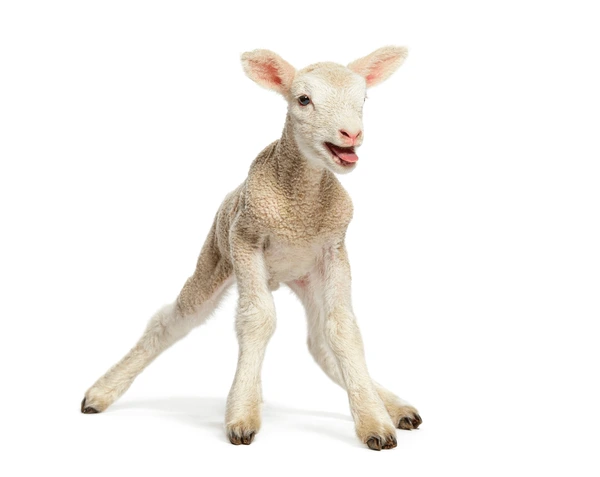
A lamb is simply a young sheep, technically under one year old.
The adult female is called a ewe, the intact adult male is a ram, and a castrated male is a wether.
Sheep as a species are called Ovis aries and they are among the very first animals domesticated by humans… sheep were being kept for meat, milk, and skin over 10,000 years ago, and selectively bred for wool from around 5,000 BC.
Lamb & Sheep — Animal Fact Sheet
Scientific name: Ovis aries
Weight (adult): 35 to 180 kg depending on breed
Lifespan: 10 to 12 years on average
Gestation period: About 5 months
Number of breeds: Over 1,200 documented worldwide
Global population: Approx. 1.2 billion domestic sheep
Diet: Grasses, legumes; ruminant (cud-chewing) with 4-part stomach
Sleep: Only 4 to 5 hours per night, in short naps
Vision: Rectangular pupils; nearly 360-degree field of view
Social memory: Can recognize up to 50 sheep faces for up to 2 years
First milestones: Can stand and walk within minutes of birth
Weaning age: 4 to 5 months; then begins grazing
Things I Did Not Expect to Find Out About Sheep
- They are emotionally complex. Studies show sheep can feel afraid, bored, sad, happy, and even display optimism and pessimism. They recognize emotional expressions on the faces of flock-mates and communicate stress to each other through bleating. Ewes have a specific “caregiver bleat” just for their lambs.
- They have strong social bonds. The closest relationships are between ewes and their lambs, and between sibling lambs. Sheep who are separated from their flock freeze, or bolt in panic. They feel safest in a group.
- Lambs play. After the first week of life, lambs form play groups. They run, jump, buck, and spin. These behaviors indicate positive emotions when they have space and freedom.
- Dolly the sheep was a real thing. She was the first successful clone of an adult mammal, a Finn Dorset sheep. Before Dolly, that kind of cloning was considered impossible.
- There are over 1,200 breeds worldwide. Some have two horns, some have four or even six. The Racka breed has long, spiral-shaped horns on both males and females. The Najdi breed has long, silky hair instead of curly wool.
Lamb and Sheep Breeds Worth Knowing
| Breed | Origin | Known For |
| Merino | Spain | Very fine, soft wool; widely farmed globally |
| Suffolk | England | Meat production; black face and legs; docile temperament |
| Shetland | Shetland Islands, Scotland | Hardy; thick double fleece in many natural colors; excellent mothers |
| Horned Dorset | Dorset, England | Can breed out of season; prolific; good for year-round lamb production |
| Katahdin | United States | Hair sheep (sheds naturally); parasite-resistant; easy to care for |
| Valais Blacknose | Swiss Alps | Extremely fluffy; distinctive black patches; popular as pets |
| Racka | Hungary | Both males and females have long spiral horns |
| Welsh Mountain | Wales, UK | One of the oldest breeds; small but hardy; known as good mothers |
How to Care for Lambs
The more I read about the actual, practical lives of lambs, the more the symbol made sense to me. These are gentle, vulnerable, sensitive creatures.
Of course they became the symbol of sacrifical love.
So here is what the care guides and homesteaders say:
Shelter and Housing
Sheep are hardy but they do need protection from harsh weather. A simple three-sided shed is often enough… they don’t need elaborate barns. Good ventilation is important. If you’re raising sheep on rotating pasture, a moveable shelter is practical. They are prey animals and feel safer in groups, so never keep a single sheep alone if you can help it.
- Provide a guard animal (a dog, llama, or donkey) to protect the flock from predators like wild dogs or cats.
- Llamas bond especially well with sheep and have a natural aversion to canine predators.
- Great Pyrenees dogs are a well-known livestock guardian breed… naturally docile toward sheep, protective against threats.
Feeding
- Most sheep do well on pasture grass in warm months and hay in cooler months.
- Fresh, clean water should be available at all times.
- Feed bunks work well… they allow all sheep to eat at once and make it easy to monitor what’s being consumed.
- Old feed should not be left out; bunks should be cleaned regularly.
- Some sheep need mineral supplements, especially selenium, depending on your soil’s mineral content.
Wool and Grooming
Not all sheep need shearing.
Wool breeds like the Suffolk or Merino need to be sheared at least once a year, usually in spring. If you skip it, the wool becomes too heavy and can cause heat stress or parasite problems.
Hair sheep, like the Katahdin or St. Croix, shed their coat naturally every spring. Much less maintenance.
- Hoof trimming is essential for all sheep. Overgrown hooves cause lameness and pain.
- Check regularly for parasites (internal worms are a common sheep health issue).
- Only deworm animals that actually need it to avoid building dewormer resistance in your flock.
- Newborn lambs may need a selenium injection if the local soil is deficient.
Lambing Season
Most sheep produce single or twin lambs. Labor usually takes one to three hours. After birth, the ewe breaks the amniotic sac and begins licking the lamb clean. This bonding process is critical… if it is disrupted, the ewe may reject the lamb. Some breeders confine the new ewe and lamb together in a small pen called a lambing jug to strengthen that bond before returning them to the flock.
Lambs can stand and walk within minutes of being born. They begin grazing at four to five months and are considered mature around one year old.
So, the Lamb… and Maundy Thursday…
I started this whole thing just wanting to understand why a small, fluffy, bleating animal ended up at the center of one of the most sacred days in the Christian calendar.
And now I get it.
Kinda…
The lamb’s connection to Maundy Thursday goes way, way back.
Not just to Jesus.
Back to the very first Passover, the one in the book of Exodus. This is what the Last Supper was actually commemorating… a Passover meal. And central to the Passover is a lamb.
The Passover Lamb (The Old Covenant)
In Exodus 12, God told Moses that a devastating plague was coming to Egypt… the death of every firstborn son. But the Israelites (God’s people, who were enslaved in Egypt at the time) were given an escape.
Each family was told to take a lamb. It had to be without blemish.
A year old.
Male.
They were to slaughter it, and paint its blood on the doorposts of their homes. When the angel of death passed through Egypt that night, it would “pass over” the homes marked with the lamb’s blood.
Every firstborn in Egypt died that night. But the Israelites were spared. Because of the blood of the lamb. After that plague, Pharaoh finally released the Israelites from slavery. They were free. And ever since, Jewish families have commemorated that night with the Passover meal… which includes, yes, a lamb.
The Last Supper that Jesus shared with his disciples? That was a Passover meal. They were gathered to remember Exodus. To remember the lamb. To remember deliverance.
Jesus as the Lamb (The New Covenant)
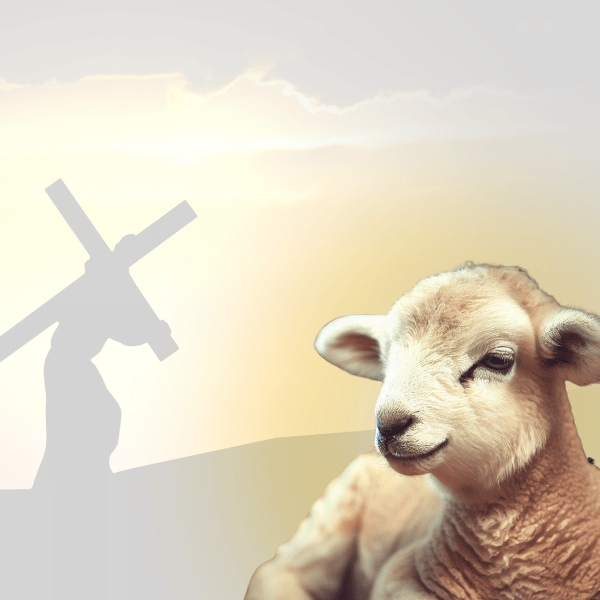
And then Jesus did something that reframed the entire symbol. He took bread and said, “This is my body.” He took wine and said, “This is my blood… poured out for you.” He was presenting himself, essentially, as a new Passover lamb. A sacrifice not for one night in Egypt, but for all of humanity.
1 Corinthians 5:7 makes this explicit… “Christ, our Passover lamb, has been sacrificed.” And biblical scholars like Tremper Longman have written that the entire structure of Jesus’ earthly ministry points to the truth that he is the fulfillment of the Exodus… the Passover Lamb.
The lamb isn’t random.
It is the throughline… from Egypt to Jerusalem, from Exodus to the Upper Room, from the blood on the doorpost to the bread and wine on the table. It is the symbol of innocence offered up. Of sacrifice that protects the beloved.
Of something pure, given over freely.
And every time you see that little lamb in a Holy Week image… maybe on a prayer card, maybe in the corner of an old mural at San Pedro, maybe on a neighbors decorasion on their fence… you’re seeing thousands of years of meaning compressed into one small, gentle creature.
That, I think, is why it endures.
Not because it’s pretty (though baby lambs are unreasonably cute).
But because it tells the whole story.
Without a single word.
Happy Huwebes Santo, Davao. Go do your seven churches. Bring water. Wear comfortable shoes.
Wait… Did I explain What Maundy Thursday Was?
Maundy Thursday is what you call a Christian feast day that falls during Holy Week, specifically the Thursday before Easter Sunday.
It marks the beginning of the Paschal Triduum which is just a fancy Latin way of saying the three holiest days of the Christian calendar… Maundy Thursday, Good Friday, and Holy Saturday.
Three days.
One big, sorrowful, then joyful story.
(Thank you Sacred Heart Seminary of Palo, I guess I learned something while I was there hehehe.)
The word “Maundy” itself is fascinating.
It comes from the Latin word mandatum, which means commandment.
Specifically, it refers to what Jesus said to his disciples at the Last Supper, from John 13:34… “A new commandment I give you: Love one another. As I have loved you, so you must love one another.”
That is what the whole day is named after.
Love.
One word.
One instruction.
One Thursday.
“Maundy Thursday is important not just as history but as instruction. It tells us what kind of king Jesus was. Not a king who conquers with power… but one who kneels on the floor and washes dirty feet.”
Why Maundy Thursday Matters (Especially Here)
In the Philippines… Maundy Thursday is treated as a holiday.
Businesses close.
The streets get quiet.
People gather in churches in the morning.
In the evening, families do the Visita Iglesia… visiting seven churches (or sometimes fourteen, following the Stations of the Cross) to pray and reflect. We used to do this with our mom.
Other things to observe:
- Drinking alcohol is traditionally forbidden on this day.
- Making loud noise… singing, shouting… is also considered disrespectful.
- Fasting and abstaining from meat is observed by devout Catholics.
- Some communities in the Philippines still stage the Senakulo, a dramatic reenactment of Jesus’ passion.
- The pabasa, a chanting of verses about Christ’s suffering, often ends on Maundy Thursday.
- After the evening Mass, the altar is stripped bare. Flowers removed. Candles extinguished. The empty sanctuary is meant to feel like loss.
It is the kind of day that used to silence an entire city.
And while younger Filipinos now sometimes use Holy Week for beach trips… which, honestly, no judgment… the spiritual weight of Maundy Thursday is hard to escape if you grew up with it.
Ok… I think that’s it.
Baa-aa-aa-aa for now.