

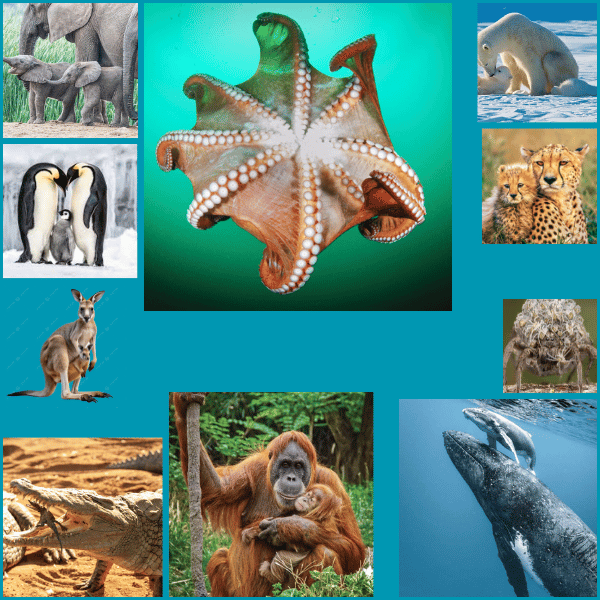
Heya, Happy Mothers Day!
This list is dedicated to every mother reading it.
Human, animal, or otherwise.
Been writing non-stop for a few hours so I don’t really have a good intro for this except… enjoy your day!
1. Giant Pacific Octopus
| Dedication Level | Wow Factor | Philippine Relevance |
| Maximum — she dies for them | Off the charts | Found in Philippine waters (smaller species) |
I put the octopus first because I think she deserves to be first.
Plus, the moment Lyle saw the picture of the octopus on Wiki, he would not stop shouting octopus!
So… yeah…
The octopus.
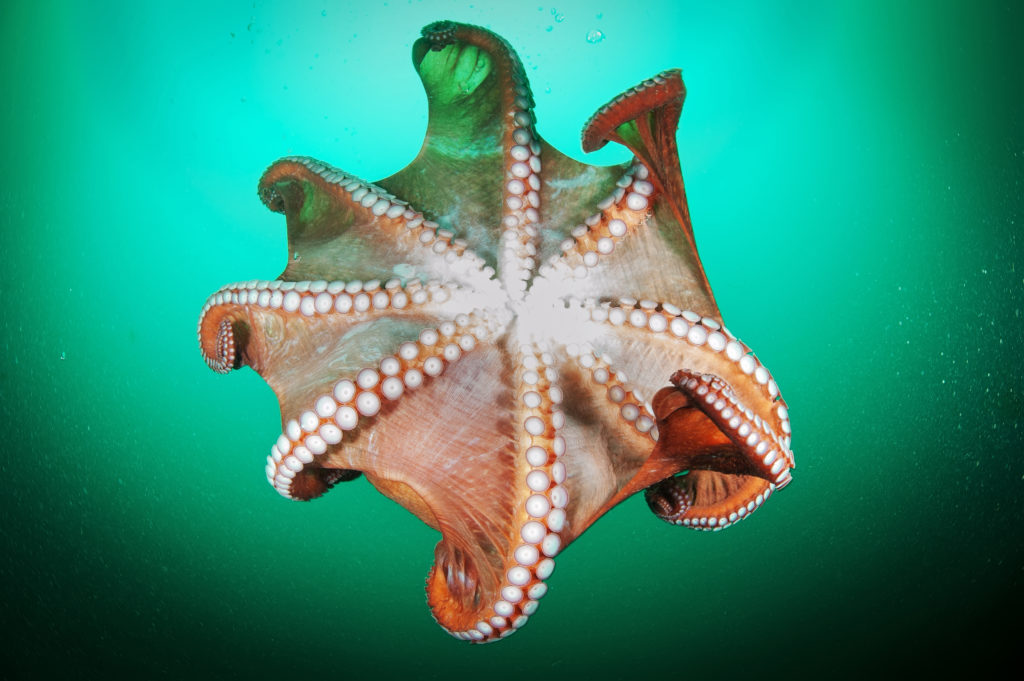
Ever since I watched that documentary about this diver and an octopus he’d built a relationship with, I’ve been thinking about it as an excellent mother’s day entry.
A female Giant Pacific Octopus lays somewhere between 20,000 and 100,000 eggs in a den. She then spends the entire incubation period, which can last four to eight months depending on water temperature, guarding those eggs.
She cleans them constantly.
She aerates them by blowing water over them with her siphon.
She keeps predators away.
And she does not eat.
Not once.
For months.
She slowly starves herself, her body consuming itself to keep her alive long enough to see her eggs hatch.
Most females die within weeks of the eggs hatching… not from any disease or predator, but from the simple exhaustion of having given everything she had.
She never even gets to meet her children in any meaningful way.
They hatch and drift away as larvae into the open water.
She is gone.
I don’t have a joke for this one.
It’s just one of the most extraordinary things in nature and I think it deserves to be said plainly.
2. Orangutan
| Dedication Level | Wow Factor | Philippine Relevance |
| Exceptional — longest bond of any non-human primate | Very high | Critically Endangered in Borneo and Sumatra |
Orangutans hold the record for the longest mother-child dependency of any non-human animal.
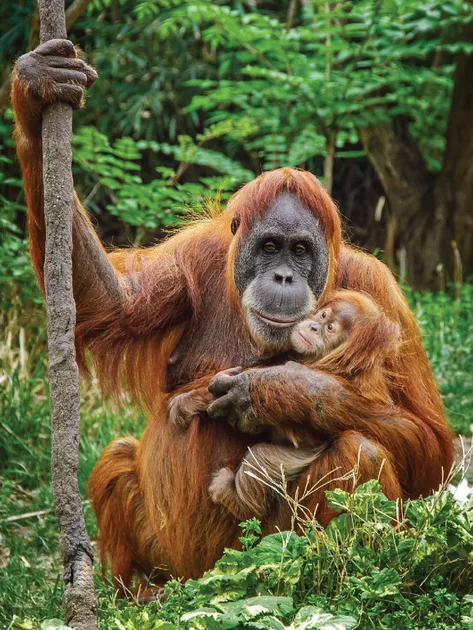
Up to eight years.
Sometimes longer.
The baby rides on her constantly for the first two years, sleeps in her nest, learns everything from watching her… how to find food, which plants are safe to eat, how to build a sleeping nest each night from branches and leaves, how to navigate the forest canopy without falling.
And she does this alone.
Male orangutans are largely solitary and play almost no role in raising young.
The mother is the entire world of her offspring for nearly a decade.
She teaches them everything they need to survive in one of the most complex ecosystems on the planet.
What strikes me most is the patience.
Eight years of carrying, teaching, protecting, and guiding… and then watching them go.
Female orangutans typically have only three or four offspring in their entire lifetime because each one takes so long to raise.
Each birth is a massive investment.
Eight years is not to be taken lightly.
3. Saltwater Crocodile
| Dedication Level | Wow Factor | Philippine Relevance |
| Strong — guards nest and hatchlings actively | Maximum surprise factor | Native to the Philippines, present in Davao region |
I have spent a lot of time thinking about and writing about saltwater crocodiles on this site. I watched Pangil at Davao Crocodile Park more times than I can count. And one of the things I always wanted to say about these animals is that they are more complex than their reputation suggests.
The crocodile as mother is the best evidence of that.
A female saltwater crocodile builds a nest mound of vegetation and soil, lays her eggs, and then guards that nest aggressively for the entire incubation period of two to three months. In 35-degree Philippine heat. Without eating much. She will attack anything that approaches, including humans.
This is the same animal that is one of the most feared predators on the planet… and she is sitting on a pile of eggs like a very terrifying chicken.
When the eggs are ready to hatch, the hatchlings call from inside the shells and she responds by carefully opening the nest. She then gently picks up hatchlings in her mouth (the same mouth that can exert the strongest bite force of any living animal) and carries them to the water.
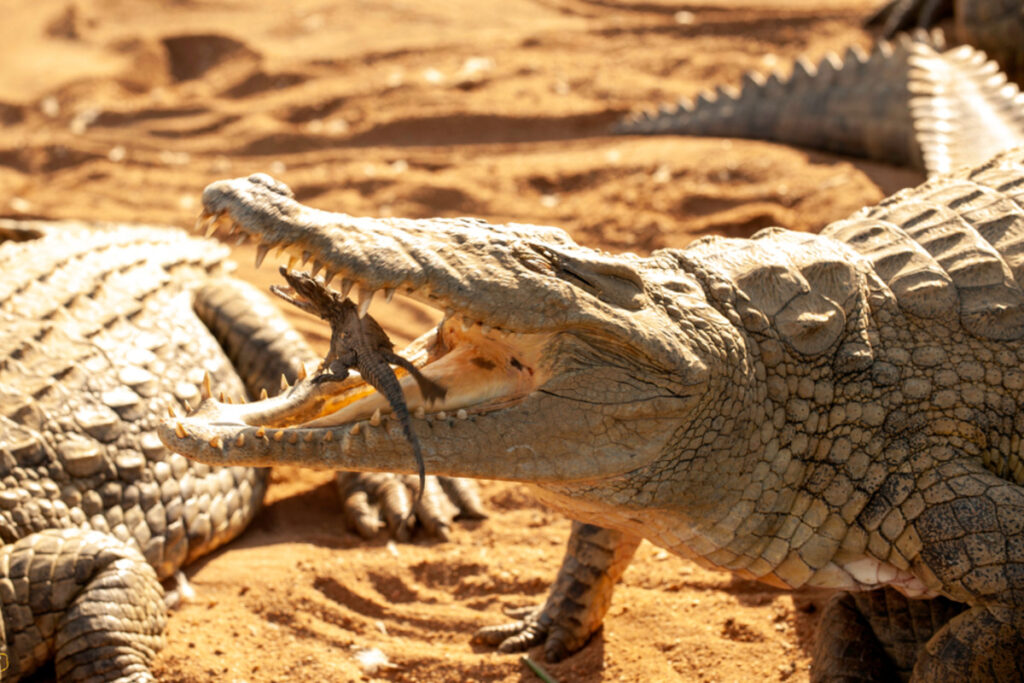
She does not eat them.
She does not crush them.
She carries them with a precision and gentleness that seems almost impossible given what she is.
She guards the hatchlings in the water for up to a year afterward, responding to their distress calls and driving off predators.
This is the animal people call a monster.
I call her a dedicated mother who happens to also be an apex predator.
Both things are true at the same time.
And now Lyle is also mimicking the calls of the crocodilian hatchlings. It’ll be amusing the next time we go to Croc Park and see if he can get a reaction from the crocodiles there if he starts making hatchling sounds.
4. Polar Bear
| Dedication Level | Wow Factor | Philippine Relevance |
| Extraordinary — fasts entire nursing period | Very high | Not found in Philippines; conservation symbol globally |
Polar bear mothers enter their maternity dens in autumn already pregnant and already fattened for what’s coming.
They give birth in the den, usually to twins, and then spend the next four to eight months nursing their cubs… without eating.
Their entire energy comes from fat reserves built up before denning.
By the time the family emerges in spring, the mother has lost up to 40 percent of her body weight.
The cubs are born tiny and helpless (about the size of a guinea pig despite their mother weighing 200 kilograms).
They emerge from the den in spring into one of the harshest environments on Earth… and their mother immediately begins teaching them to hunt, swim, and survive on sea ice that is increasingly unstable due to climate change.
She teaches them to hunt seals. She protects them from male polar bears, which will kill cubs given the opportunity.
She does all of this while slowly rebuilding her own body.
Polar bear cubs stay with their mothers for about two and a half years.
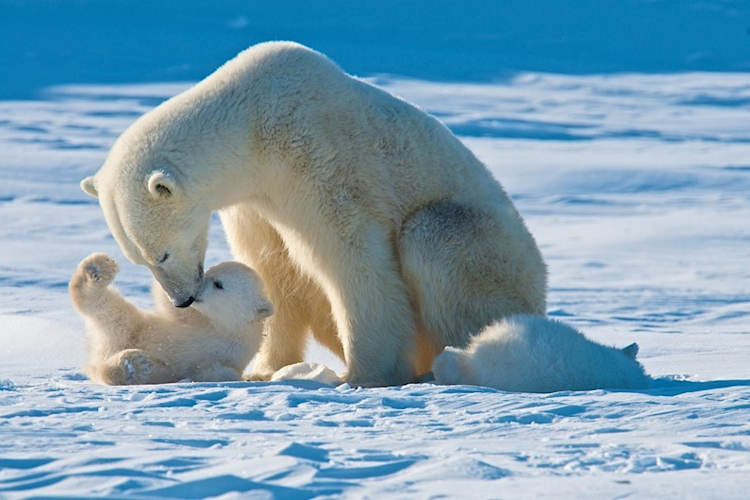
After that she is ready to breed again.
The cycle repeats.
For animals… pregnancy seems to be a good way to go on a diet…unlike humans.
5. African Elephant
| Dedication Level | Wow Factor | Philippine Relevance |
| Extraordinary — collective matriarchal parenting | High | Not native to Philippines; seen in zoos |
The elephant matriarch is one of the most powerful examples of maternal leadership in nature.
She is not just a mother to her own calf. She is the living memory and emotional anchor of an entire family group.
She remembers where the water is during drought, which migration routes are safe, which elephants in other herds are allies. Her knowledge, accumulated over decades, keeps her family alive in ways that are invisible until you study them closely.
Elephant calves are born after a 22-month gestation, the longest of any land mammal. They are dependent on their mothers for years.
But they are also surrounded by other moms, aunts, sisters, adnd cousings of the herd who help with childcare in a way that is remarkably similar to how extended Filipino families work.
It takes a village, as the saying goes.
In elephant society, that village is almost always female.
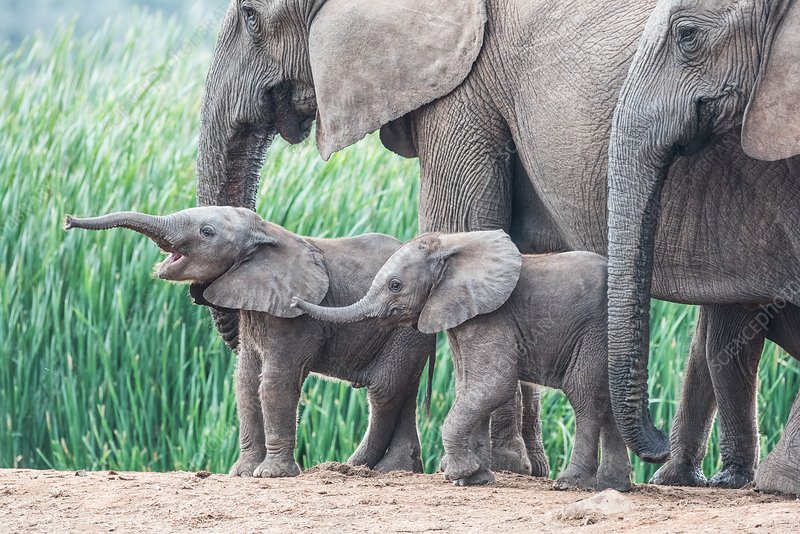
When an elephant calf dies, mothers have been observed staying with the body for days, touching it repeatedly, refusing to leave. Whether this constitutes grief in the way humans experience it is debated by scientists.
But watching it is heartbreaking.
6. Emperor Penguin
| Dedication Level | Wow Factor | Philippine Relevance |
| Very high — extreme physical sacrifice | High | Not found in Philippines; climate change symbol |
The Emperor Penguin’s breeding cycle is one of the most extreme in nature.
The female lays a single egg in the middle of the Antarctic winter, the coldest and darkest season in one of the coldest and darkest places on Earth. She then passes the egg to the male (who balances it on his feet under his brood pouch) and walks up to 80 kilometers to the open sea to feed.
She feeds for two months, building up energy reserves.
Then she walks back.
Through Antarctic blizzards.
In temperatures that can drop to minus 40 degrees.
Carrying a stomach full of food for her chick.
When she arrives, the chick has just hatched.
She feeds it from what she’s been storing in her body.
The male, who has been fasting and incubating for over two months, finally gets to go eat.
This level of coordination and commitment to a single offspring… a single egg in conditions that seem designed to destroy everything… is humbling.
The Antarctic winter doesn’t care.
The penguin mother does, a lot.
And in this case, it’;s the dad who gets to go on a diet.
7. Wolf Spider.
| Dedication Level | Wow Factor | Philippine Relevance |
| High — constant physical contact | Maximum surprise for a spider | Present in the Philippines including Davao |
Most spiders lay their eggs and that’s it.
The wolf spider does not.
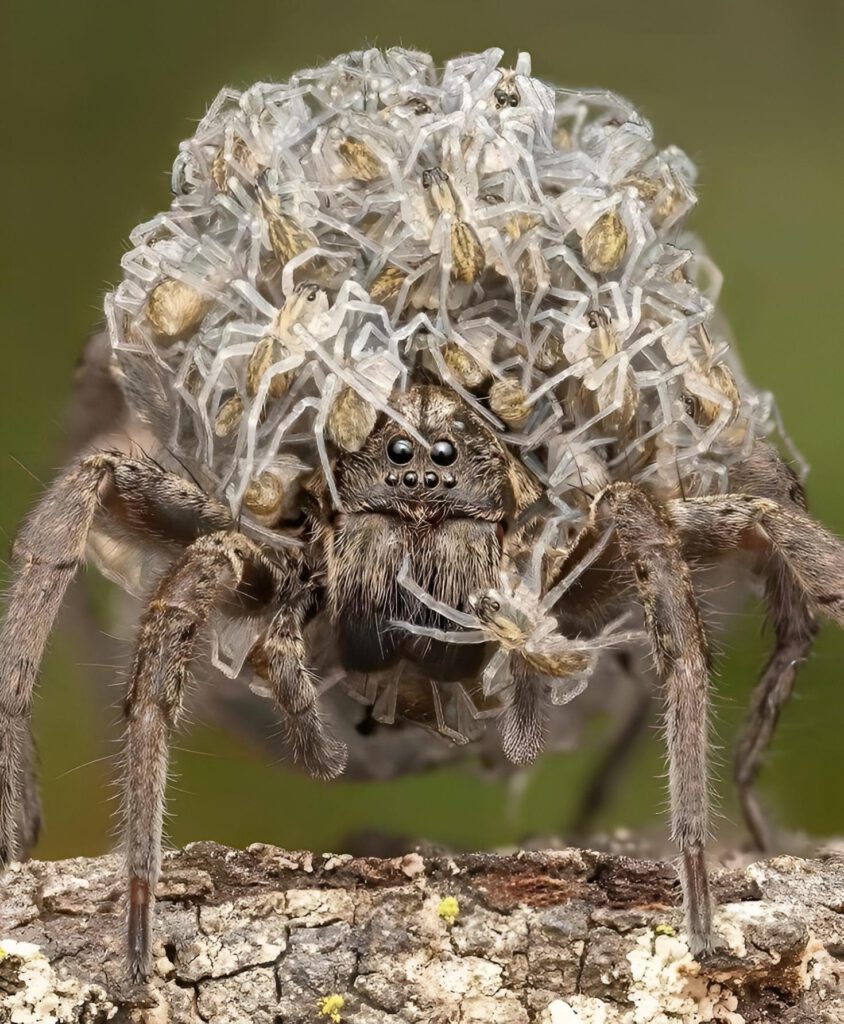
She carries her egg sac attached to her spinnerets, dragging it with her everywhere she goes for weeks. When the eggs hatch, the spiderlings crawl up onto her abdomen and she carries all of them on her back. All of them.
At the same time.
Hundreds of tiny spiders riding their mother like the world’s most terrifying bus.
She does this for about a week, until the spiderlings are large enough to disperse and fend for themselves.
If any fall off, she waits for them to climb back up.
She doesn’t eat them.
She carries them.
I think the wolf spider deserves more credit than she gets.
There is nothing glamorous about her situation.
She’s a medium-sized spider living under leaves and rocks, dragging an egg sac around and then wearing her children.
But the commitment is real and the behavior is genuinely touching once you stop being unsettled by the image of it.
Which may take a moment.
For some.
That’s okay.
8. Kangaroo.
| Dedication Level | Wow Factor | Philippine Relevance |
| Very high — multi-stage simultaneous parenting | Very high | Not native to Philippines; seen in zoos |
The kangaroo’s reproductive system is one of the most fasinating in mammals.
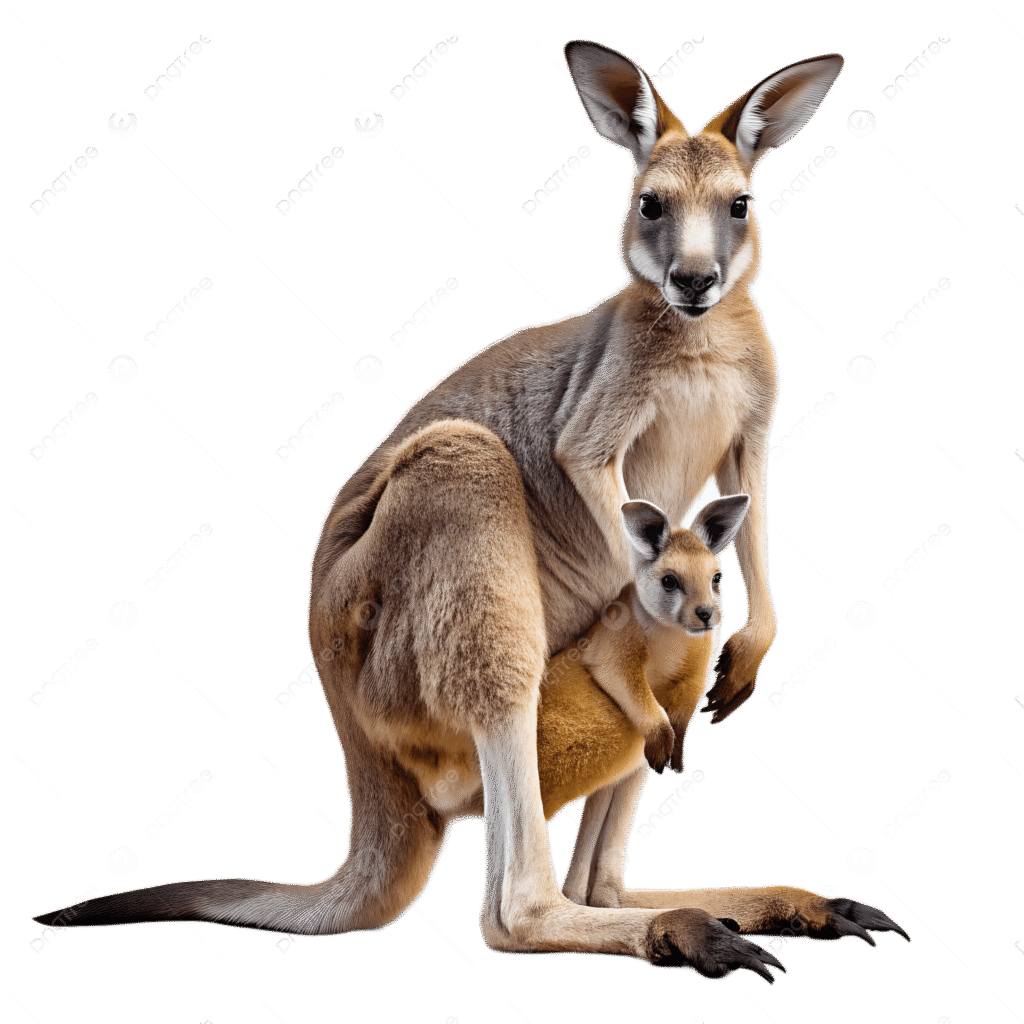
A female kangaroo can have three joeys at different stages of development at the same time: one joey that has left the pouch and is hopping alongside her, one joey inside the pouch still nursing, and one embryo in a state of suspended development in the uterus, waiting for the pouch to become available.
She produces two different types of milk simultaneously from different teats, each formulated for the developmental stage of the joey drinking it.
The joey in the pouch gets one formula. The joey that has left the pouch but still comes back to nurse gets another.
At the same time.
Her body manages this automatically.
The joey is born after only 33 days of gestation, barely formed, about the size of a jellybean.
It crawls entirely on its own from the birth canal to the pouch through its mother’s fur… a journey of only a few centimeters but enormous for something so undeveloped.
Once in the pouch it attaches to a nipple and stays for months, completing its development in what is effectively a second womb.
9. Cheetah
| Dedication Level | Wow Factor | Philippine Relevance |
| Very high — solo parenting under extreme pressure | High | Not native to Philippines; endangered globally |
Cheetah mothers raise their cubs completely alone.
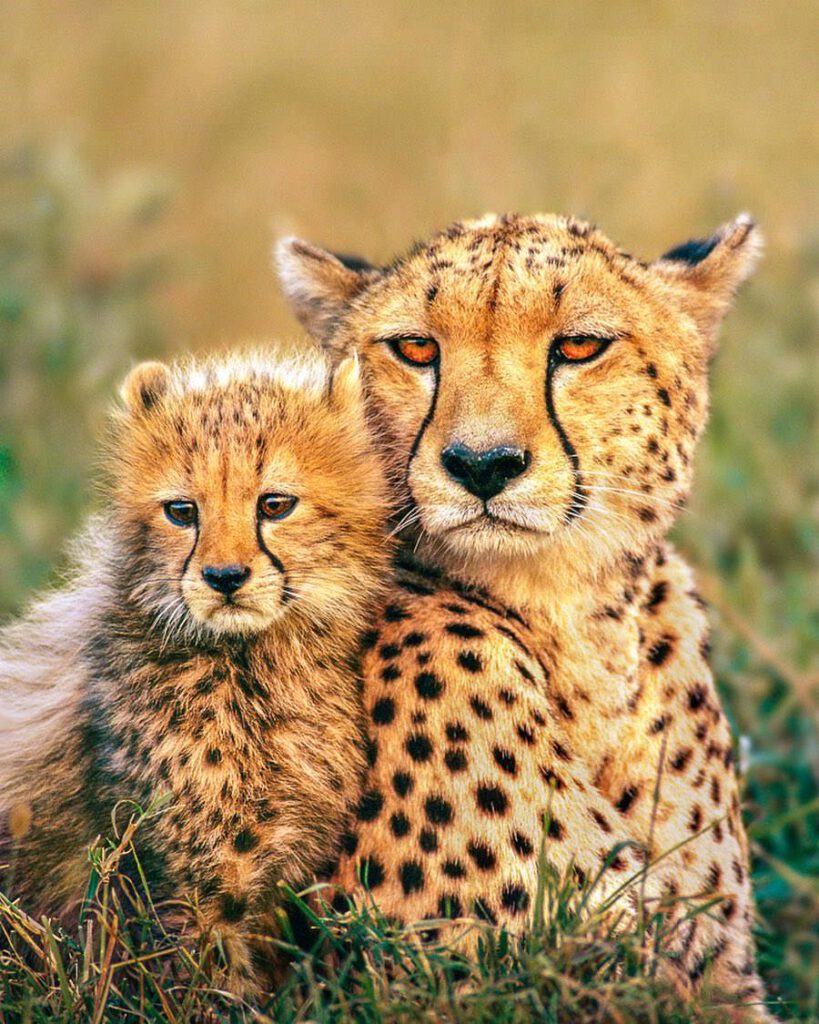
No mate, no family group, no support system.
Just her and a litter of two to six cubs in a landscape patrolled by lions and hyenas who will kill the cubs if they find them.
The mother has to hunt (which requires leaving the cubs hidden) and then return with food while somehow keeping their location secret.
She moves them frequently to reduce the chance of discovery.
She also teaches them to hunt.
This process takes months.
She starts by bringing live prey for the cubs to practice on, demonstrating technique, correcting mistakes. By the time the cubs are about 18 months old, they can hunt independently.
She stays with them a little longer as a group, then separates.
The cub mortality rate is high.
Up to 90 percent of cheetah cubs don’t survive to adulthood in the wild, primarily from predation by lions and hyenas.
The mother cannot prevent all of it.
But she tries with everything she has.
That effort, sustained over 18 months of solo parenting in one of the most competitive ecosystems on Earth, is remarkable.
10. Humpback Whale
| Dedication Level | Wow Factor | Philippine Relevance |
| High — migratory dedication spanning ocean basins | High | Passes through Philippine waters on migration |
Humpback whales migrate thousands of kilometers from their cold-water feeding grounds in polar regions to warm tropical waters to give birth.
They do this because calves are born without the thick blubber layer they need to survive cold water.
The mother makes this enormous journey while pregnant, arrives in warmer seas, gives birth, and then nurses her calf for about a year while the calf develops enough blubber to handle the journey back.
Humpback calves are born large (about 4 to 5 meters long) but are completely dependent on their mothers. They nurse on milk that is about 50 percent fat, gaining up to 45 kilograms per day during the nursing period. The mother barely eats during this time, surviving on her own fat reserves the same way a polar bear does, just in a tropical ocean instead of an Arctic den.
Humpback whales pass through Philippine waters on their migrations. The song of a humpback whale is one of the most complex vocalizations produced by any animal on Earth.
When a mother and calf travel together, they communicate quietly, in low-frequency sounds, a private conversation between two animals in an enormous ocean.
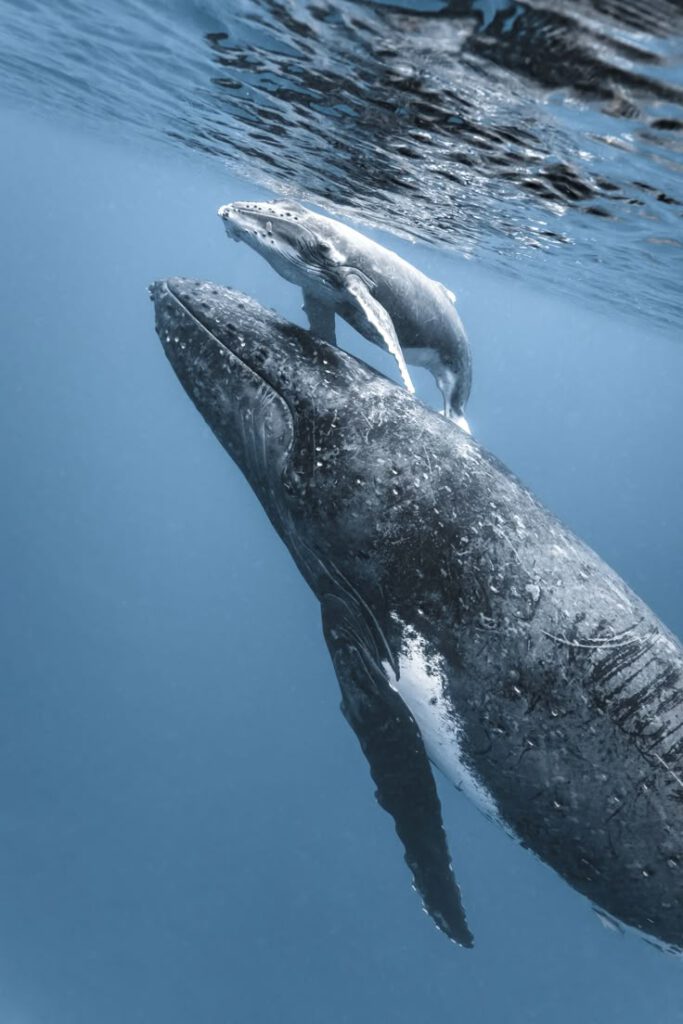
I find that genuinely beautiful.
Happy Mothers Day Y’All!
What strikes me most after putting this list together is how varied maternal love looks across species. Sometimes it’s eight years of patient teaching in a rainforest canopy.
Sometimes it’s dying of starvation in a den so your eggs can hatch.
Sometimes it’s standing quietly in a river with your hatchlings in your mouth, carrying them gently to the water.
Sometimes it’s just waiting.
Staying.
Not leaving.
The forms are different.
The commitment underneath them is the same.
If you’re a mother reading this, on whatever day this finds you… you are in extraordinarily good company.
Happy Mother’s Day.
Or happy whatever day it is when you read this.

