

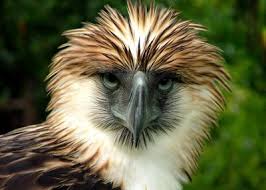
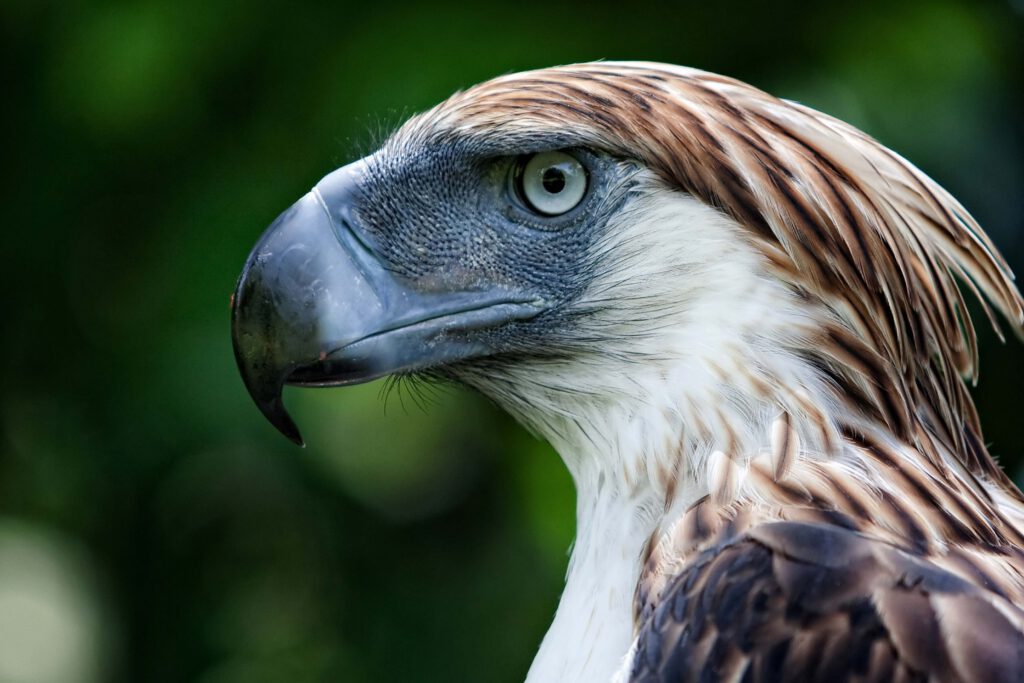
PHILIPPINE EAGLE
| COMMON NAME | Philippine Eagle |
| SCIENTIFIC NAME | Pithecophaga jefferyi |
| ANIMAL CLASS | Bird |
Scientific Classification
| Kingdom | Animalia |
| Phylum | Chordata |
| Class | Aves |
| Order | Accipitriformes |
| Family | Accipitridae |
| Genus | Pithecophaga |
Physical Characteristics
| Body Length | 86 to 102 cm (34 to 40 inches) |
| Wingspan | 184 to 220 cm (72 to 87 inches) |
| Weight | 4.7 to 8 kg (10.4 to 17.6 lbs) |
| Lifespan in Wild | Up to 30 years |
| Lifespan in Captivity | Up to 41 years (documented at DENR facilities) |
| Sexual Maturity | 5 to 7 years |
Habitat & Distribution
| Native Range | Philippines — primarily Mindanao, also Leyte, Samar, and Luzon |
| Habitat Types | Old-growth tropical rainforest, montane forest |
| Climate Preference | Tropical, humid; 20 to 30 degrees C |
| Conservation Status | CR — Critically Endangered |
| Population Trend | Decreasing |
Diet & Behavior
| Diet Type | Carnivore |
| Primary Food | Flying lemurs (colugos), monkeys, large lizards, snakes, small deer, pigs |
| Activity Pattern | Diurnal |
| Social Structure | Monogamous pairs; solitary outside of breeding |
| Reproduction | Seasonal |
| Incubation Period | 58 to 68 days |
| Clutch Size | 1 egg per breeding cycle; breeds once every 2 years |
PET SUITABILITY FOR DAVAO CITY: 1 out of 5
| 5 | Excellent — beginner-friendly, easy care |
| 4 | Good — suitable for experienced owners |
| 3 | Challenging — requires specific knowledge |
| 2 | Very difficult — experts only |
| 1 | Not suitable — wild animal or illegal |
OVERALL RECOMMENDATION: Do not keep — this is a critically endangered national symbol protected by Philippine law, and keeping one is a serious criminal offense.
Suitability Analysis
I remember the first time I learned about the Philippine Eagle… it was through a National Geographic magazine. My uncle, Tito Dan used to buy these magazines for me because he knew I had this deep interest in animals, dinosaurs and so many other things.
Back then, I actually thought it was a bird that monkeys ate (the old name, Monkey-eating Eagle, really threw me off as a kid).
Back then, I thought monkeys were cute (before one, a family pet, tore a girl’s face off because she got too near. I think I was 8 or 9 when that happened and it really scared all of the neighborhood kids back in SIocon).
I was prepared to see monkeys eating an eagle in those pages.
Imagine my surprise when what I saw was a full page spread of an eagle tearing a small monkey with its large beak.
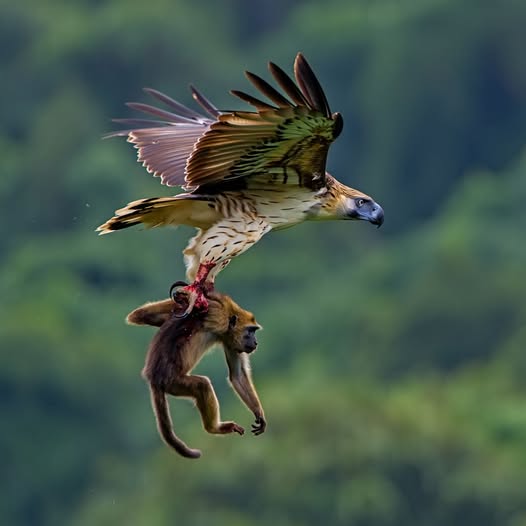
Yeah… confusing.
I’m glad they changed it to Philippine Eagle.
Makes way more sense.
You cannot keep a Philippine Eagle as a pet.
Under Republic Act 9147 (the Wildlife Resources Conservation and Protection Act) and RA 6147, harming, capturing, or possessing a Philippine Eagle is punishable by up to twelve years in prison and hefty fines.
The DENR and CITES Appendix I protection make this absolute.
This isn’t a grey area.
I’ve been to the Philippine Eagle Foundation in Malagos (just outside Davao, up in the hills) several times, and even there, the eagles are under strict government care.

You see them behind enclousures the size of a small barangay gym.
That should tell you something about the space they need.
A typical home or subdivision lot?
Not even close to the space they need.
These birds need territory ranges of up to 100 square kilometers in the wild.
I’ve seen them up close in Siocon on my lolo’s land… two pairs have nested on massive trees there for years.
One time, an eagle swooped down and took a small piglet clean off the ground.
There was this powerful whoomp sound, like a sack of rice dropped hard, and the pig didn’t even squeal before it was gone.
These are not pets.
These are apex predators and national treasures.
Care Guide
This section exists for educational purposes only, as care of Philippine Eagles is restricted to accredited government institutions like the Philippine Eagle Foundation in Malagos, Davao City.
Housing for a Philippine Eagle requires enormous, purpose-built flight aviaries… we’re talking hundreds of square meters minimum, with tall trees or climbing structures to simulate forest canopy. The Philippine Eagle Foundation’s enclosures are a good reference.
Nothing commercially available at any local pet shop comes close to what they need.
Feeding is handled by trained wildlife biologists.
Their diet consists mainly of live or freshly hunted prey… flying lemurs, large reptiles, and sometimes small mammals.
There is no commercial eagle food.
Sourcing appropriate prey is a full-time logistical operation.
Climate-wise, Davao’s heat and humidity actually suit them reasonably well since they are native to Mindanao’s forests. But they need shade, canopy cover, and very low stress environments. Any disruption, like noise from traffic or construction, can cause serious psychological harm.
Health care requires specialist avian vets with raptor experience.
The Philippine Eagle Foundation and DENR have dedicated veterinary teams. There are no walk-in exotic vets in Davao equipped for this. Enrichment must simulate hunting behavior… live prey interaction, problem-solving challenges, and large flight space for exercise.
LEGAL STATUS IN THE PHILIPPINES: STRICTLY PROHIBITED for private ownership. Protected under RA 9147, RA 6147, and CITES Appendix I. Penalties include up to 12 years imprisonment and fines up to P1,000,000.
CARE TAGS: Critically Endangered • Illegal to Own • Government-Protected • Expert Institution Care Only • National Symbol
Pros & Cons
| Pros (as a species to appreciate) | Cons (as a pet — which it is not) |
| Apex predator — top of its food chain, ecologically vital | Completely illegal to own under Philippine law |
| One of the world’s largest and most powerful eagles | Needs 100+ sq km of territory in the wild |
| Long lifespan — up to 41 years in captivity under expert care | No commercial food source; requires live or fresh prey |
| Thriving conservation programs at Philippine Eagle Foundation | Extremely sensitive to stress, noise, and human contact |
| National symbol — source of Filipino pride | Near-impossible to find qualified vets outside government facilities |
Trivia
- The Philippine Eagle was formerly called the Monkey-eating Eagle because early Western observers saw it hunting monkeys. Its diet is actually dominated by flying lemurs (colugos).
- It is one of the largest, most powerful, and most endangered birds of prey in the world, with a wingspan reaching up to 220 cm or 7 feet 2 inches.
- Philippine Eagles mate for life and raise only one chick every two years, making population recovery extremely slow.
- The Philippine Eagle Foundation in Malagos, Davao City is one of the few places in the world where captive breeding of this species has succeeded.
- In Siocon, Zamboanga del Norte, wild pairs have been documented nesting on old-growth trees on private land, a sign that forest preservation by local communities directly helps their survival.
Killing a Philippine Eagle carries a penalty of up to 12 years in prison under RA 9147 — the same classification as killing a person in some legal contexts.

