
Every year, Labor Day reminds us of something simple yet often forgotten: humans weren’t built to work endlessly without rest. We celebrate the hardworking, the overlooked, the diligent people who quietly move the world forward.
But whenever I think about labor — the kind that requires strength, patience, and endurance — I can’t help but think of one creature that has carried more weight, both literal and symbolic, than we ever have: the elephant.
Elephants have been called many things: giants, guardians, engineers of the wild, gentle titans.
But historically, they were also beasts of burden.
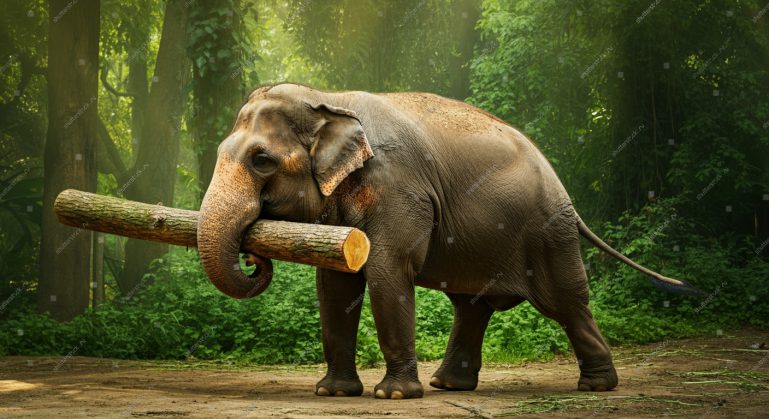
For centuries, humans relied on their power to move logs, lift heavy loads, transport people, and even march into war. Before trucks, forklifts, and excavators existed, elephants were nature’s original heavy machinery.
But unlike machines, elephants think, feel, remember, grieve, bond, and love.
And that fact alone makes their long history of labor worth revisiting — especially today.
Elephants as Beasts of Burden: Strength with a Story
The elephant’s massive size and intelligence made them invaluable in human industries. Asian elephants, in particular, were widely used in logging operations, construction, ceremonial work, transportation, and warfare.
Their ability to lift logs heavier than a small car, their surprising dexterity with their trunks, and their calm temperament made them ideal working partners.
But here’s the thing: elephants didn’t choose the job.
They were assigned to it.
Elephants were captured, domesticated, and trained for tasks that often pushed them to their limits.
They dragged hardwood trees across muddy forests. They carried massive stones used to build temples. They hauled goods across long distances. Some even fought in battles they didn’t understand.
If you look back at history, it’s easy to romanticize this — humans and elephants working “side by side.” But if you look a little closer, you’ll see a labor system built on submission, not partnership.
And this is where the connection to Labor Day becomes clear.
Labor Day and the Elephant Lesson
Labor Day isn’t just a holiday. It’s a reminder: Labor deserves dignity.
It exists because humans eventually said, “Enough.”
Enough with inhumane working hours.
Enough with exploitation.
Enough with treating workers as property or tools.
In a strange, poetic way, elephants symbolize the very thing Labor Day stands against: the idea of a living being treated purely as a source of strength.
Yet at the same time, elephants also symbolize resilience — the kind that refuses to break even under unimaginable weight. If humans can look at elephants and admire their strength, maybe we should also learn from their struggle.
Just like elephants, people are often expected to carry loads beyond what’s fair — physically, emotionally, and financially. Labor Day is a reminder that strength doesn’t justify exploitation.
The Modern Elephant: No Longer a Worker, but a Species in Need
Today, elephants are no longer widely used for heavy labor, but their challenges haven’t disappeared.
- Habitat loss is shrinking their roaming space.
- Poaching for ivory continues, despite global bans.
- Human-elephant conflict is rising as farms expand.
- Domesticated working elephants still exist in some countries, especially in tourism. Yeah, those elephants you can ride on in Singapore and Thailand? Yeah, they’re not doing it because they love people, they’re doing it because they’re forced to do it.
Elephants, once symbols of power, are now symbols of vulnerability — and their future lies in our hands.
Conservation efforts around the world are trying to protect them through habitat protection, anti-poaching programs, rehabilitation centers, and laws that limit or ban their use in entertainment and labor.
It’s a powerful shift.
From beasts of burden…
to beings worth saving.
And honestly? It feels like redemption — not just for elephants, but for the way we view labor in general. Respect, fairness, and compassion aren’t just for humans; they’re for every creature capable of feeling pain, joy, or fear.
What If You Were Allowed to Keep an Elephant as a Pet?
Okay — let’s entertain the “what if.”
Let’s say laws weren’t a factor and you could legally own an elephant. What would that even look like?
Spoiler: It’s not the same as adopting a dog.
Elephants are the largest land animals on Earth, weighing up to:
- 6,000 kg for Asian elephants
- 6,800 kg for African bush elephants
They live 50–70 years, have extremely complex social lives, and require enormous amounts of space, food, and environmental enrichment. So if you think keeping a ball python or a hamster is already a commitment, an elephant is “commitment level: impossible.”
But for fun — and to give you an idea of how complex elephants are — here’s a realistic care sheet based on their biological needs.
Mini Elephant Care Sheet (If Owning One Were Even Possible)
1. Space Requirements
- Minimum of 10–20 acres per elephant. Since we use hectares, a hectare is roughly a little below 2.5 hectares. So yes, you would need a lot of land to own even just one. At least 8 hectares for one elephant.
- Access to forests, mud wallows, shade, grasslands, and a natural water source. Another thing to consider.
- High fencing to protect both the elephant and nearby communities. And this is going to cost millions of pesos to put up.
2. Diet
Elephants spend up to 18 hours a day eating.
Daily intake includes:
- 100–200 kg of grasses, leaves, bark, roots
- Fruits (bananas, sugarcane, papaya)
- Constant access to clean water (they drink 70–200 liters per day)
You’d need a small farm — literally — just to keep up.
3. Social Needs
Elephants are deeply social animals.
They require:
- A herd or at least another elephant companion
- Mental enrichment
- Emotional support and interaction
A single elephant will become stressed, depressed, or aggressive. You will need at least 2. And 2 elephants times 8 hectares is 17.
4. Enrichment
To prevent boredom and stress:
- Logs for pushing and lifting
- Large pools for swimming
- Mud pits for cooling
- Foraging activities
- Daily walks (yes, with supervision)
It’s like having a very, very, very, very, very, very, very, very, very, very large dog.
5. Health Care
Elephants need:
- Regular foot care
- Veterinary monitoring
- Parasite management
- A team of specialists, not just a single vet
Veterinarians trained in elephant health are extremely rare. If I ever get to the point of owning one (hey, I can dream, can’t I?) I’ll have to study to become a veterinarian. Hmmm… sounds like a good excuse to get some more education and hopefully add a Dr. to my name… ahhh dreams…
6. Ethics
Even if you could care for one physically, there’s the moral side:
- Elephants belong in social groups
- They travel long distances daily
- Captivity severely limits their natural behavior
The truth?
Loving elephants means not keeping them as pets.
Labor, Strength, and Compassion
Elephants show us two sides of labor:
The burden of being forced to carry more than you should.
The dignity of being recognized as a living being deserving respect.
This Labor Day, maybe the best thing we can do is look at elephants — their history, their struggles, their emotional depth — and reflect on how we treat both workers and animals.
Strength shouldn’t be an excuse to exploit.
Endurance shouldn’t be a reason to ignore suffering.
And just because someone can carry a heavy load doesn’t mean they should.
Elephants have carried humanity’s weight for centuries.
The least we can do now is help carry theirs.


1 thought on “Elephants – A Labor Day Reflection”